A day in Ngong Ping: the Big Buddha’s gestures and Po Lin’s rooflines
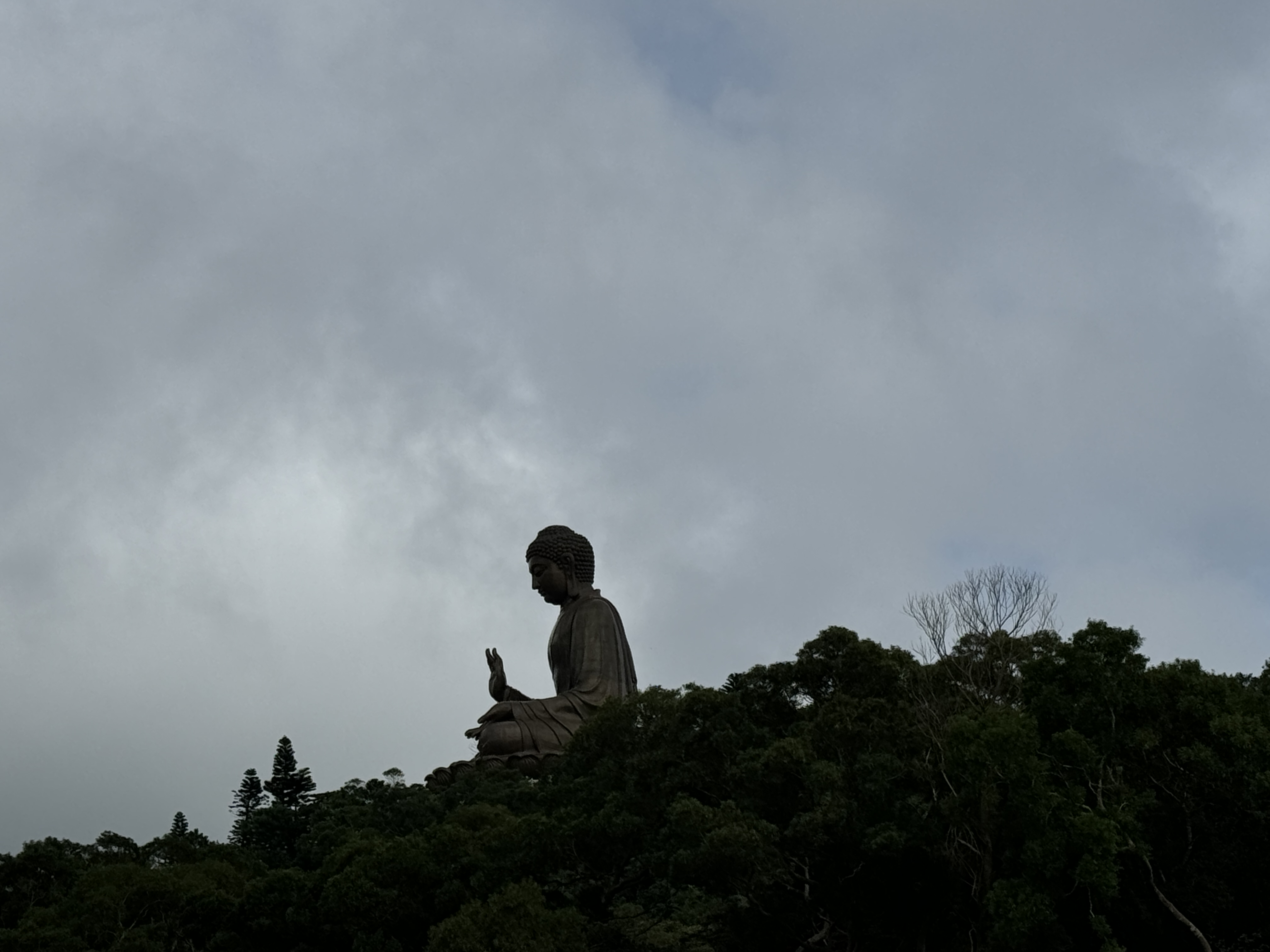
Seeing the Tian Tan Buddha on the hillside from the cable car is a beginning. Up close, the raised right hand, the upturned left palm and the folds of the robe give the bronze figure a character that is harder to read from a distance. At Po Lin Monastery, the focus shifts from one statue to a sequence of gates, halls and courtyards. Build the day around these two ways of looking, with a vegetarian lunch between them and enough energy left for the descent.
The example below starts in Tung Chung at 09:00 on a weekend or public holiday when the cable car is operating normally, and allows about seven hours and 35 minutes. You can finish earlier after one round of sightseeing; there is no need to add a shopping stop just to fill a day. Check the Ngong Ping 360 operating calendar for your date first. General hours are 10:00–18:00 on weekdays and 09:00–18:30 on weekends and public holidays, subject to specific notices. Closing time is not a deadline at which you can safely join the queue.
Separate the cable-car ride from the queues at both ends
The Tung Chung cable-car terminal is near Tung Chung MTR station. The ride takes about 25 minutes each way. On arrival at Ngong Ping, you still need to leave the cabin and terminal, then walk towards the Buddha and monastery. For the return journey, you must queue again; you cannot stay in the same cabin and ride straight back. These distinctions matter more than the headline journey time when planning a day.
The official ticket page lists an adult return ticket in a Standard Cabin at HK$295. That is one ticket category, not the cost of the whole outing. Crystal Cabins, packages and single journeys are priced separately. Child tickets cover ages 3–11, and children under 12 must travel with someone aged 15 or above. Senior concessions have Hong Kong residency and document requirements, so age alone does not establish eligibility. Check the terms for your chosen ticket and date at checkout, and budget separately for food and travel to and from Tung Chung.
| Example time | Minutes | Activity | Allocation |
|---|---|---|---|
| 09:00–09:35 | 35 | Meet near Tung Chung station, reach the terminal, check tickets and queue | Walking 10, ticket checks and waiting 25 |
| 09:35–10:00 | 25 | Outbound cable-car ride | Ride 25 |
| 10:00–10:25 | 25 | Leave the terminal and follow signs towards the Buddha area | Walking 15, orientation and opening information 10 |
| 10:25–11:40 | 75 | Climb the Buddha steps, look at the sculpture and descend | Steps and movement 35, viewing 25, rest 15 |
| 11:40–12:40 | 60 | Reach the vegetarian kitchen, ask about the food and have lunch | Walking 10, ordering and waiting 15, eating 35 |
| 12:40–14:10 | 90 | Choose gates, hall exteriors and courtyards along the monastery’s main axis | Walking 20, viewing 50, seated rest 20 |
| 14:10–14:35 | 25 | Take a water break and check weather and return-queue information | Rest 20, information check 5 |
| 14:35–15:00 | 25 | Return to the Ngong Ping cable-car terminal | Walking 20, orientation and queue check 5 |
| 15:00–15:45 | 45 | Return ticket checks and queue | Waiting 45 |
| 15:45–16:10 | 25 | Return cable-car ride | Ride 25 |
| 16:10–16:35 | 25 | Leave the terminal, walk back towards Tung Chung station and arrange onward travel | Walking 15, getting organised and checking transport 10 |
The total is 455 minutes. Walking, steps, queues, viewing and rest times are planning allowances, not timings measured on a visit; queues may take longer. If the outward journey runs late, shorten monastery viewing that has not yet begun. Do not wait until closing time is near before starting back to the terminal. On a weekday with a 10:00 start, reassess the day’s operation and queues, shorten the visit and head back early; simply shifting every row one hour later is not enough.
Look at the Buddha’s hands, then choose how far to climb
The Buddha’s general opening hours are 10:00–17:30, distinct from the monastery’s 09:00–18:00. Check the signs on arrival before deciding whether to climb. If you need frequent rests, are unsure about a long staircase, or conditions make the steps unsuitable, concentrate on permitted lower-level areas and the monastery courtyards. Viewing from below does not create an obligation to reach the upper platform. Assistance available for the cable car also does not establish a continuous step-free route to that platform.
If you climb, save energy for coming down rather than rushing to find a photograph. Near the statue, two details are enough to start with. The monastery’s account of the Tian Tan Buddha interprets the raised right hand as a gesture of fearlessness and the upturned left palm in terms of fulfilling wishes; the lotus base also carries religious meaning. Look first at the direction of the palms, then at how the robe’s folds lead your eye towards the knees and base. It is a more specific memory than a single frontal photograph.
This is a modern bronze sculpture cast in sections and assembled. The monastery describes artistic influences from different Buddhist traditions in its face and clothing. You do not have to memorise the history: try looking at the outline from farther away and the posture and surface when closer. People worshipping on the platform have their own reasons for being there. Keep the way clear while photographing and respect any no-photography signs.
Know where lunch is, without expecting a fixed set menu
The monastery’s vegetarian dining information places the kitchen to your left when facing the Main Shrine Hall, with general service hours of 11:30–16:30. Lunch follows the Buddha visit in this example, giving you a proper seated meal between the stairs and the afternoon’s architectural viewing.
The monastery says meals vary with party size and season, so a photograph online should not be treated as a permanent menu. Ask how food is served, how much there is, the price and the expected wait before deciding to eat here. Explain any allergies or ingredients you need to avoid individually; vegetarian food does not automatically meet every dietary requirement. The neighbouring snack shop may suit a lighter appetite, but snacks may not replace the meal you need. If nothing suitable is available, choose a place open that day in Ngong Ping where the food and prices can be clearly checked. Shorten monastery viewing that has not begun, while keeping lunch and the return journey.
Read the main axis without treating every doorway as an invitation
Po Lin’s architectural description sets out an axis from the Mountain Gate through the Hall of Skanda Bodhisattva and the Main Shrine Hall to the Grand Hall of Ten Thousand Buddhas. Courtyards and buildings on either side give it a symmetrical arrangement. Choose what to see according to the signs and access available that day; you need not collect every building name. From a place that leaves the path clear, look at how a hall’s doorway, roof and open space fit together before moving into the next courtyard that visitors may enter.
At the Main Shrine Hall, look at the layers of its double-eaved roof: take in the outline from a little farther away, then notice the shade under the eaves and the columns as you approach. The monastery associates this hall with Ming and Qing palatial design, while its description of the Grand Hall refers to Song architectural concepts. That gives you a concrete comparison: how do roof shapes and courtyard proportions make a place feel spacious or solemn? The style names need not become a quiz, and comparing them is no reason to enter a closed area.
These halls remain places of religious activity. An open door does not necessarily make every room accessible to visitors. During ceremonies, restrictions or busy periods of worship, stay within the visitor areas and look quietly at the exterior instead. Rest somewhere visitors are allowed to sit after looking around. You need not spend all 90 minutes on your feet, nor wait until you are exhausted to stop.
Leave with one clear detail, and put the journey back first
If you want another look at something during the visit, use the viewing time already allowed rather than adding a second circuit. Before leaving, think of the Buddha’s gesture or a particular hall’s eaves: which detail is easiest to remember? One clear impression is enough to bring the visit to a close. Do not detour into private or repair areas for another angle, or add attractions merely to fill the afternoon.
If you are 15 minutes behind after lunch, reduce the 50 minutes of viewing in the unstarted 12:40 segment to 35 minutes. If you are 30 minutes behind, reduce it to 20. Keep that segment’s 20 minutes of walking and 20 minutes of rest, and choose just one permitted hall exterior and an adjoining courtyard. Time already spent cannot be recovered. If the delay comes later, reassess activities still ahead, keeping the return journey, a proper meal and necessary rest first.
The cable-car FAQ explains that bad weather can suspend service. Follow staff directions if service stops or passengers are being redirected. Do not assume a bus will get you back to Tung Chung on the same schedule, and do not use service roads as shortcuts. If weather or operating conditions are already unsuitable before departure, choose another day. The point is to have enough space to appreciate the Buddha and monastery, rather than to complete a fixed number of hours.