First Time in Kuala Lumpur: Choosing Between the Old Town, KLCC and Local Neighbourhoods
When planning your first visit to Kuala Lumpur, start by deciding whether you want to see how the city’s streets and public spaces are used or spend time exploring one attraction in depth. Markets and shopping streets in the old town suit the first approach; Aquaria or a museum can fill a half-day for the second. The Petronas Twin Towers do not have to share a day with every other landmark. Giving each day one main area usually makes it easier to allow for meals, transport and the things that hold your attention longer than expected.
This guide is for a first or second independent visit focused on the city. Two hours, four hours and a full day are ways to choose how deeply to explore, not targets for adding up nearby landmarks. An airport travel day is not automatically a full sightseeing day either. Deduct arrival formalities, luggage and check-in before deciding what time remains.
Choose an area with three questions
What do you want to take away? For a useful souvenir, start with Central Market. For a memorable city skyline, choose the exterior views around KLCC. To understand artworks or an exhibition, pick one museum rather than three. What are you willing to pay for? Looking at a streetscape and shopping are different spending decisions; the aquarium, observation deck and museums each have their own ticket arrangements. How long can you comfortably keep walking? Places close together on a map may still be separated by traffic, slopes or the approach to a large building. Straight-line distance is not enough.
Tourism Malaysia describes Central Market, Petaling Street, KLCC, Bukit Bintang and Brickfields as areas with distinct commercial and cultural identities. The table uses those differences to help you choose. The durations are editorial suggestions and do not include travel from your accommodation. See the official Kuala Lumpur travel guide.
| What you want to do | An area to start with | A useful amount of time | What to leave out for now |
|---|---|---|---|
| Look at crafts and choose a useful souvenir | Central Market and the Pasar Seni area | Two hours, concentrating on two types of goods in the market | Do not add a craft class, Petaling Street and a square to the same short visit |
| See how shopping streets and different faiths share a neighbourhood | Petaling Street and public streets in the old town | A half-day focused on a few streets and exteriors | Check visitor rules separately before entering places of worship |
| See modern landmarks and the skyline | KLCC public spaces | A short walk; make it a half-day if entering an attraction | Exterior views, tower admission and the aquarium are not one ticket |
| Explore aquatic displays and read signs with children | Aquaria | Four hours including arrival, waiting, the visit and lunch | Do not add another large ticketed attraction |
| Get to know everyday culture through food and shops | Brickfields | Start with roughly two hours for one meal and a shopping street | Do not assume religious sites are open to visitors at any time |
| Shop, eat and keep indoor options available | Bukit Bintang | A half-day or time around dinner | Decide what you want to shop for rather than visiting every mall |
The old town: the market and the streets offer different visits
A visit to Central Market can have a small, specific purpose. Compare a batik-patterned textile item with an everyday household item, asking about materials, origin, how it was made and how to wash it. The official shop directory includes businesses specialising in batik goods for everyday use. That gives you a starting point for browsing; it does not guarantee that every product is handmade or locally produced. See this Central Market shop example.
Petaling Street is better suited to looking at the relationship between shops, side streets and public space. Although the two areas are close, you need not fit everything into one visit. Comparing products and asking questions can make the market a complete stop in its own right. If shopping does not interest you, observe the public streets and leave time for a meal in the neighbourhood. Where religious buildings are closed to visitors, stop at the exterior as seen from public areas; entry is not a condition for completing the outing.
Central Market’s website lists both MRT and LRT services to Pasar Seni as ways to reach it. You still need to identify the usable station exit, crossings and market entrance on the ground. Arriving at a large station is not the same as standing outside a shop. Check the market’s directions.
KLCC: choose between the exterior, the observation deck and the aquarium
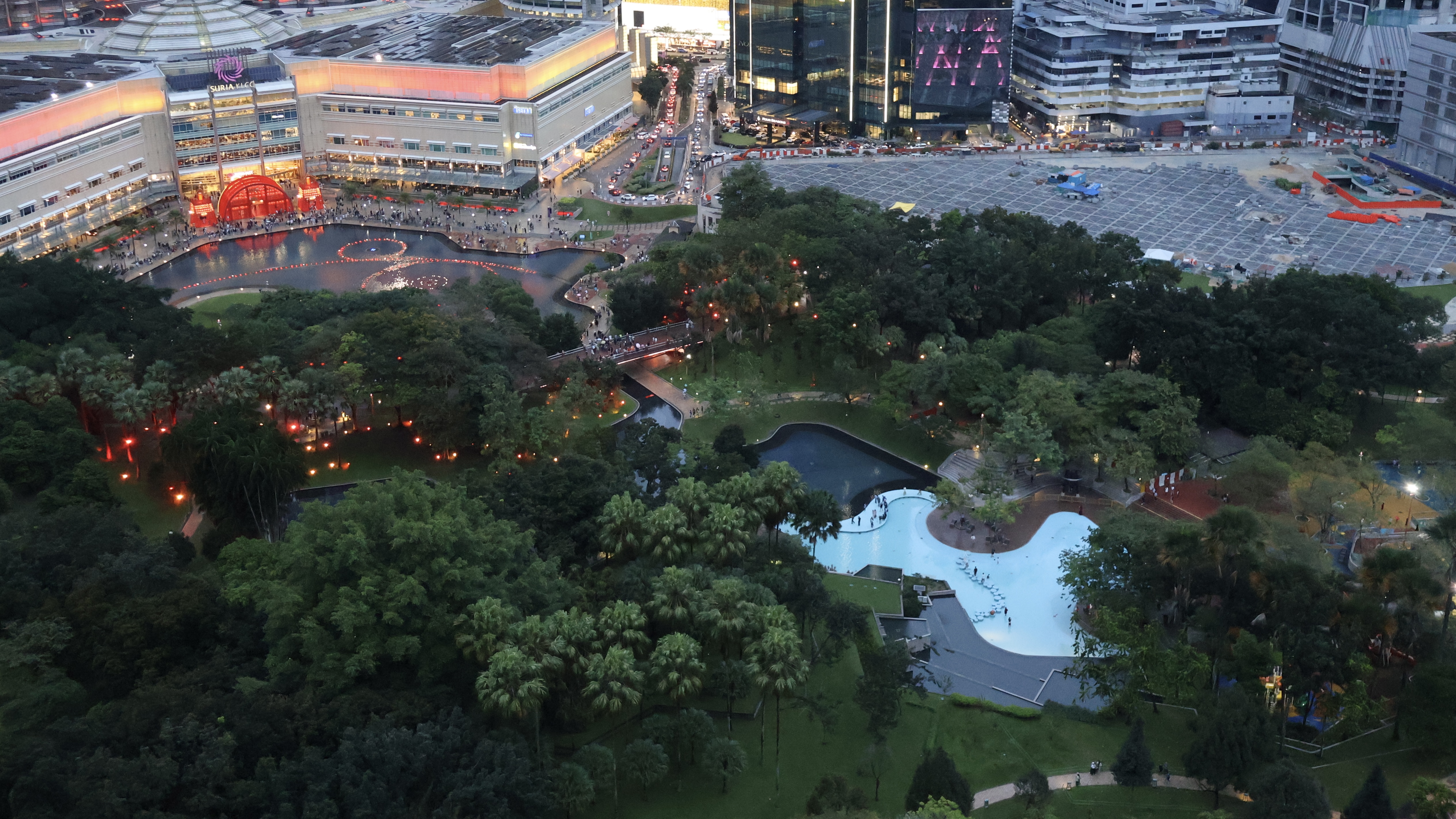
If you only want to see the Twin Towers from outside, you do not need to assume that an attraction ticket is part of the visit. If you want an elevated view of the city, check the observation deck’s dates, ticket types and time slots before deciding to buy. Aquaria is a separate choice. It is beneath the convention centre, and a visit needs separate allowances for the entrance queue and time inside. See Aquaria’s official information.
Aquaria suits people who enjoy reading exhibit signs and comparing how animals move. The Aquaria half-day itinerary offers a starting point. Its four hours already include lunch. Shopping or going up the towers needs additional time, and tower ticket arrangements must be checked separately. If some companions only want exterior views, you can choose different activities, but agree on an easily recognised meeting point and time first. Do not assume that everyone will find one another immediately in a large complex.
Make a museum the main activity for a half-day
The Islamic Arts Museum Malaysia is another indoor option. On arrival, look at the day’s exhibitions and guided-tour information, then choose the subject that most interests you. Begin by describing the shapes and colours you see before reading the labels to check your interpretation. You do not need to cover every gallery on a first visit. The museum’s usual opening hours are 09:30–18:00, with exceptions for religious holidays and Ramadan; check announcements before setting out. See the museum’s visitor information.
Do not use the map alone to turn the museum, gardens and religious sites in this area into an assumed easy walk. Before adding an outdoor stretch, consider your energy and the actual approach. If it rains or you are tired, a museum visit and a meal can be enough. Choose one main area for the day. If you want to add another, allow time for transfers, food and rest first.
Choosing what fits into two hours, a half-day, one day or two days
With only two hours, keep to a small area. Choose Central Market for crafts and shopping, Brickfields for a meal and a shopping street, or one stretch of KLCC public space for exterior views. Avoid using most of the time on luggage storage and rushing between places. If you have large bags, sort out storage before deciding whether to go.
With four hours, choose one main attraction to explore inside. Aquaria’s exhibits and lunch make a complete option. If you prefer art, give the half-day to one museum. When bookings, queues or weather take more time than allowed, cut optional activities rather than the margin for your return journey.
With one full day, divide the day between areas and leave real time to move between them. On a first visit, you could make the old town your main cultural neighbourhood, then choose KLCC exterior views in the afternoon or evening. Allow separately for transport and rest between the two, and adjust to what you want to see that day. If you replace the morning with a full craft workshop, avoid a difficult-to-change afternoon admission booking. If collections are your main interest, spend longer in one museum and eat nearby, leaving the remaining time for getting there and reflecting on what you saw.
With two full days, separate a neighbourhood day from an attraction day. Use the first day for the old town and a meal. On the second, choose one paid activity at KLCC or a half-day at an art museum, then add time in a local neighbourhood according to where you are staying. Leave a third large paid attraction for a future visit when it really interests you; both spending and energy are easier to manage. Trips outside the city or to distant suburbs are not automatic extensions of this city plan.
Consider transport, spending and weather together
For a short visit, you do not need to buy a transport pass before working out your journeys. List the trips you expect to take, then compare the single fares and passes available to you. If considering Rapid Kembara, check eligibility, covered services, valid days and card-purchase conditions before buying. Do not automatically include airport transport in its coverage. Consult Rapid KL’s official pass information. For an additional source when checking those points before purchase, see Touch ’n Go eWallet’s official purchase-channel FAQ.
Divide your budget into accommodation, meals, city transport and paid activities. One main purpose makes it easier to see where the money goes. To reduce attraction spending, choose fewer admissions; to reduce time in transit, cross between fewer areas. Being in the same city does not imply a short journey, and rain alone is not a reason to buy another ticket.
In heavy rain, replace an outdoor stretch with a meal or an indoor place you have already chosen in the same area. Check opening and ticket arrangements first instead of switching impulsively to a different district. If you need step-free access or less walking, establish the entrances and places to rest before choosing attractions. An area’s name alone cannot tell you how manageable it will be.
Start with the Kuala Lumpur city map to locate your accommodation and first destination, then look at the existing Central Market itinerary or Aquaria itinerary. Once you know what you want to see, the transport journey has a clear beginning and end.