Two hours in KLCC Park: looking at the Twin Towers from the lakeside
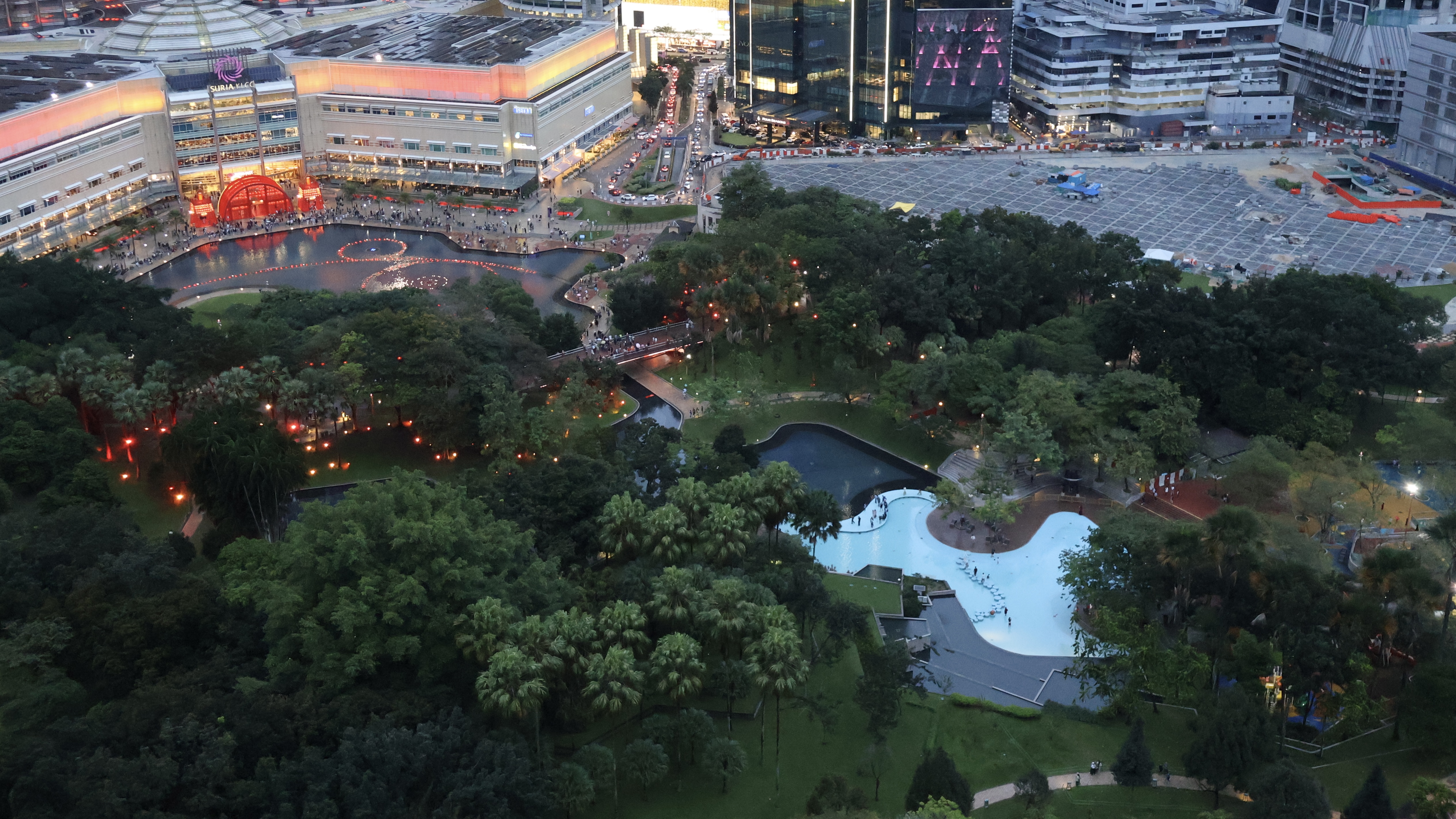
Below the Twin Towers, the obvious thing to do is step back, look up and fit both towers into a photograph. These two hours leave room for another step: look at the buildings from the lake, follow an open path to change your angle, then sit down and notice how towers, trees and people share the same urban space. This itinerary includes neither the observation deck nor the aquarium. If you want to spend time with aquatic animals and exhibitions, plan a separate visit to Aquaria.
1. Start after ten and establish your way back
Begin and finish inside Suria KLCC, near an exit that is open towards the park that day. Note the signs at the doorway or take a photograph to recognise it later, then follow the directions on site towards the lake. If an area is fenced off, choose a path that remains open; there is no need to squeeze past barriers to complete a circuit. This is a short walk with the option of turning back, not a route around the entire park.
If arriving by LRT at KLCC station, the mall's official travel directions tell visitors to follow the Suria KLCC signs into the mall. Once inside, check which exit leads towards the park. Allow separate time for getting to the station, the train journey and the walk from the station to the mall. The fifteen minutes in this schedule are an editorial allowance for finding your bearings in the mall and reaching the lake, not an official walking time. If you need lifts or a route without steps, ask the mall about usable exits and facilities before setting out, then adjust to the arrangements on arrival.
The example starts at 10:00. For another time of day, check the official park information and notices for your chosen day. Open entrances, work areas and the weather matter more than the order of your photographs.
2. At the lake, look at one tower, then the space between two
Find somewhere to stand without obstructing the path. For your first look, concentrate on one tower: let your eyes travel upwards, noticing how the outline narrows and how repeated horizontal lines divide the height into layers. Only then look at both towers together, including the gap and the bridge between them. Ask yourself what clues to this place would disappear if your photograph showed only one tower.
You do not have to keep trying to fit the very top into the frame. First take a horizontal photograph that includes the lakeside and people, then a vertical one focused on the buildings. Compare which gives a stronger sense of standing at ground level. People can help convey scale, but avoid making strangers' faces prominent, and do not step backwards towards the water or into a planted bed to get a clearer view.
If the surface is calm, notice the reflections. If there is wind, spray or a crowd, use the water as an uncluttered part of the composition instead. This visit is not timed to a lake show and includes no wait for a performance. The observation works just as well without one.
3. Change your angle along the path and see how trees frame the city
Take a short walk along a path that is open and easy to follow that day. No particular bridge or photo spot is compulsory. Find an angle where leaves conceal part of a building, then compare it with a more open view. How does the canopy break up the tower? Do people, benches and paths at ground level provide a scale for buildings that seemed distant a moment ago?
Look at the path itself, too. Where do people stop, and where do they move more quickly? How do photographers and runners share the passage? These are things you can compare on the spot without guessing anyone's identity or way of life. Stand to one side when observing and leave room for others. Follow signs about the purposes and restrictions of park facilities.
The official introduction lists paths, places to rest and children's facilities. This itinerary uses only open paths and places where you can currently sit. Playgrounds, the wading pool, work areas and lawns are not required stops, so a fence does not mean you have missed part of the visit.
4. Sit for fifteen minutes and give yourself time for a second look
Find an available seat out of the strong sun. If there is no suitable spot, return to somewhere in the mall where you may pause; there is no reason to endure the heat simply to complete an outdoor itinerary. Drink some water, then recall the two angles you have seen. What stayed with you: the shape of the towers or the space in front of them where people can spend time?
The next fifteen minutes allow one brief second look. Choose the question that interested you most, perhaps how the canopy hides part of a tower or how the lake opens up the view. Look again from somewhere still open and easy to return from. This time is more useful for comparing two ways of seeing the same place than for adding a third attraction.
5. Divide the two hours, and shorten only what you have not started
This is an editorial schedule including movement and rest, not a venue guarantee of walking times. The 10:00–12:00 window is an example. Noon is the target for returning to the original mall exit area, not for reaching your next attraction.
| Time | Activity | Minutes |
|---|---|---|
| 10:00–10:15 | Find your bearings in the mall, confirm the park exit and walk to the lake | 15 |
| 10:15–10:40 | Look at the towers and compose photographs by the lake, including changes of position | 25 |
| 10:40–11:05 | Observe open paths and the tree canopy, including short walks | 25 |
| 11:05–11:20 | Find an available seat, drink water and rest | 15 |
| 11:20–11:35 | Revisit one observation while moving in the direction of your return | 15 |
| 11:35–12:00 | Return to the mall along usable paths, with time to find your way | 25 |
The total is 120 minutes: 45 for observation, 55 for movement and orientation, five for pauses while finding your way, and fifteen for rest. If the earlier stages take fifteen minutes more than allowed, omit the fifteen-minute second look before starting it and keep the twenty-five-minute return. If they take thirty minutes extra, also reduce the unstarted twenty-five-minute path observation to ten minutes. Time already spent cannot be removed from the schedule. If you are already running late, head back instead of speeding up to recover photographs.
There is no full meal in this itinerary because its two hours are for a short walk, observation and rest; squeezing in a meal would use the return allowance. Eat beforehand or after returning to the mall, and allow separate time for queuing and eating. If you need food during the walk, finish the observation early. You do not have to fill all two hours.
6. A shorter visit can still have a proper ending
Before leaving, read the meteorological department's thunderstorm safety guidance and separately check the forecast for that day. On arrival, assess whether conditions suit time outdoors. If you hear thunder, encounter heavy rain or are asked to leave by staff, stop observing from the lake and paths and follow directions towards an indoor space you are allowed to enter. Trees and open-sided shelters are not places to take refuge from a thunderstorm. On slippery paths, change position less often; if the rain makes the visit unsuitable, end it instead of adding the aquarium or observation deck to fill the time.
In oppressive heat, bring the rest forward and shorten the path section. Back in the mall, compare your two photographs and choose the one that best expresses how much space remains for people beside the high-rise buildings. That gives the visit an ending of its own.
Base spending on your actual transport and drinking-water needs. No observation-deck or aquarium tickets are part of this itinerary. If you would like to buy a drink, you could set yourself an RM20 limit and decide after checking the displayed prices. That is an example of a personal spending limit, not a shop price, minimum spend or budget for the whole outing.