Four hours in old Kuala Lumpur: Petaling Street, two temples and the life between them
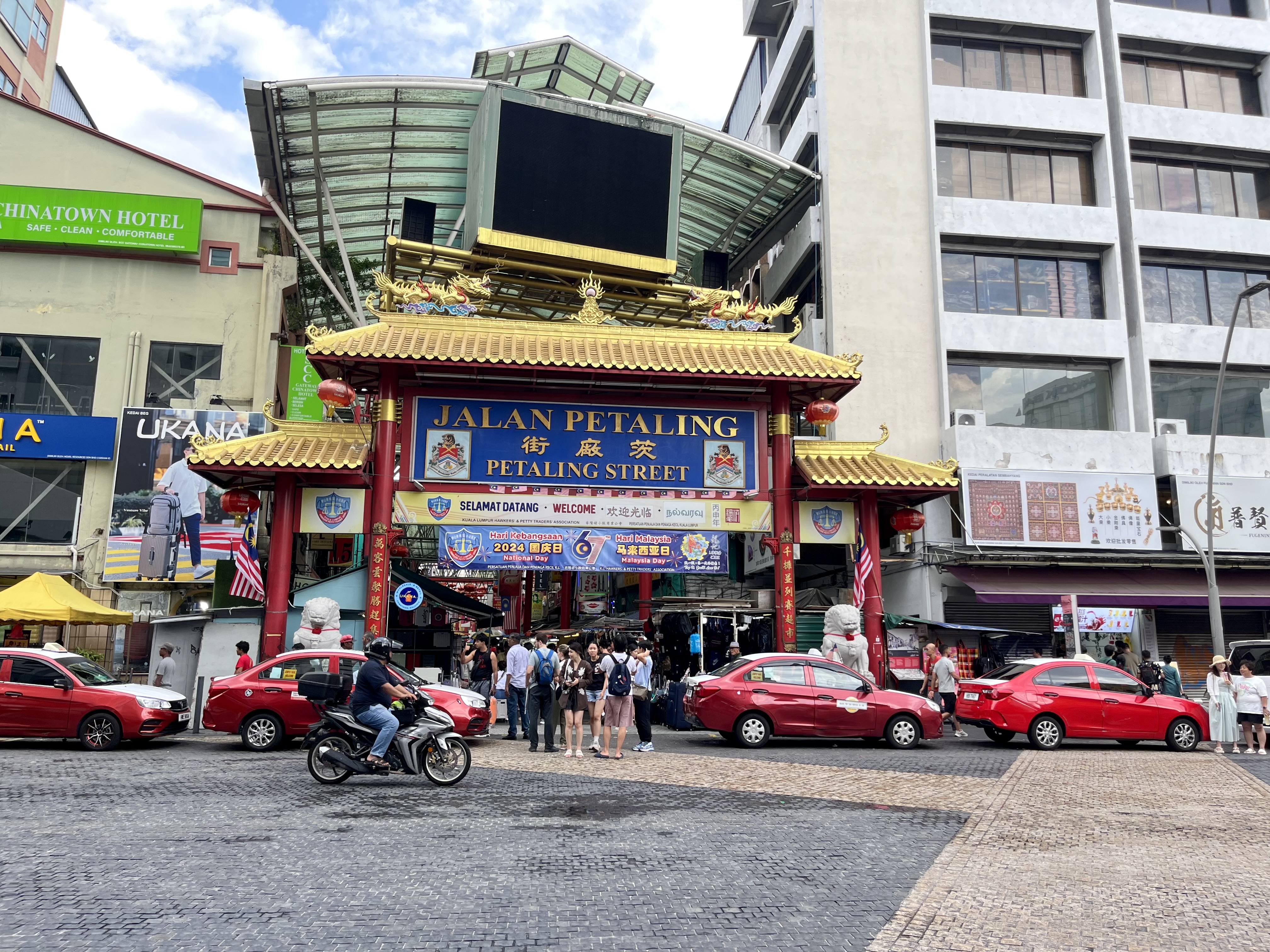
Petaling Street tends to leave you with memories of signs, stalls and food. Look above the merchandise, then continue towards nearby Jalan Tun H.S. Lee, and the neighbourhood becomes more than a shopping list. Guan Di Temple's connection with the Kwong Siew Association, the gateway tower of Sri Maha Mariamman Temple, and the shophouses still doing business around them make a rewarding morning of close looking. Take one question with you: how do trade, community organisations and places of worship each make room for themselves on the street?
This half-day walk starts outside Pasar Seni station. It takes in Petaling Street, the surroundings of Guan Di Temple and Sri Maha Mariamman Temple, then lunch and a short stretch of comparison before returning to the station exterior. The four hours include walking, crossings, checking visitor arrangements, eating and resting. It suits anyone happy to notice small details and accept an exterior-only temple visit if necessary. If choosing souvenirs is your main aim, give Central Market its own craft-shopping outing, with time to make your choices.
Check what you can visit before deciding to go inside
Before setting out, read the temple notices on the Kwong Siew Association website and confirm that day's visitor arrangements with Guan Di Temple. The website says it operates Monday to Sunday but does not give daily opening and closing times you can reliably build this schedule around. The arrival times below are planning examples, not promises of admission. Online hours for Sri Maha Mariamman Temple also vary; check its visitor hours and any special activities with the temple for your chosen day.
The basic plan is to see the exteriors from public streets and places where stopping is permitted. Going inside depends on permission at the time. If a ceremony or visitor restriction affects your stop, look from somewhere that leaves the way clear, or move on a little earlier. If the interiors are the main reason for your visit, confirm a suitable time beforehand and change the day if needed. That is a more comfortable approach than waiting indefinitely at the entrance.
Tourism Malaysia's temple introduction asks visitors to dress modestly and remove footwear when entering Sri Maha Mariamman Temple. Clothes that cover shoulders and knees and are comfortable for walking are a practical choice. Follow the instructions on where to leave shoes, whether there is a charge, and which areas you may enter. Check separately about clothing loans or shoe storage. Before taking photographs, read the signs and ask which areas may be photographed; seek consent if people, especially worshippers, will be part of your picture.
There are outdoor stretches and possible changes of level. If you need lifts, less walking or longer to cross roads, check station exits and street conditions for your needs, and allow room to adjust in wet weather. You can head back early if the midday heat, rain or your energy level makes that the better choice.
Spend thirty-five minutes looking beyond Petaling Street's stalls
Meet outside Pasar Seni station somewhere clear of pedestrian traffic. Allow the first fifteen minutes for finding your bearings, walking and waiting at crossings. Check the exit and direction on a map, then follow the available pavements and signals. This is a planning allowance; actual conditions may change the time needed.
Shops and food stalls on Petaling Street keep their own rhythms, and the daytime scene may differ considerably from the evening one. Choose a stretch you can walk that day and spend thirty-five minutes noticing how shopfronts, stalls and pedestrians share it. A shop that has not opened yet offers another view: its sign, windows and upper facade may be easier to see.
Try two questions. Is merchandise arranged at the street edge to catch passers-by, or do you need to step inside to see it properly? Looking up at signs and windows, how does the upper floor appear to be used compared with the ground floor? If something catches your eye, ask about the unit, quantity and total price before deciding to buy. Signs and products can also start a conversation; if a shop or building's story interests you, look for an explanation or ask someone willing to share it.
Warisan KL's account of the neighbourhood brings shophouses, places of worship, street markets and changing uses into the same picture. Follow that lead and look at how an older exterior works with the business now occupying it. That can be more interesting than rushing to classify every building. Choose a few places along public routes, leaving time for the relationship between the two temples and the street.
Guan Di Temple: start with the association, then look at the entrance
Allow ten minutes to move towards Guan Di Temple on Jalan Tun H.S. Lee. The temple gives its address as 168 Jalan Tun H.S. Lee; use the address, temple name and association signage together to identify it. The thirty-minute stop includes reading notices, asking where visitors may go and looking from permitted places.
The Kwong Siew Association's own history explains that Guan Di is worshipped in the association hall, which is why many people know the building as Guan Di Temple. That connection deserves a pause: a place of worship is also tied to the history of a community organisation. A separate temple introduction records the hall's former role in settling community disputes and hosting association gatherings. These are clues to neighbourhood life, rather than descriptions of services necessarily available today.
Find a position that leaves the entrance clear. Look for the temple and association names, then notice how lettering, decoration and the doorway are arranged. If you can read an inscription or couplet, choose one and take your time. If not, note a few characters to look up later; a short piece of text can give you something to follow beyond the visit. If the temple permits entry, continue through the open areas and see how the entrance connects with the hall.
Pay particular attention to the current service notice. It limits the religious services the temple offers and does not make the premises available for individuals or groups to conduct private chanting, spiritual practice, consultations or meditation. This stop therefore centres on the building and the association's history. Ask the temple directly about any religious services that interest you. Once you have seen the exterior and notices, if going inside is not possible, use the remaining time for a break or the next stop.
Sri Maha Mariamman Temple: observe the gateway and its place on the street
Keep another ten minutes for moving between the temple surroundings, waiting to cross and checking your direction. Follow pedestrian signals and open routes, then check the visitor arrangements at this temple's entrance.
Begin the thirty-minute stop by looking at the gateway tower from a safe place outside. Tourism Malaysia calls this entrance tower a gopuram and describes the temple as an active place of worship dedicated to the goddess Mariamman. Notice how the tower rises in tiers, how closely the sculptures are arranged, and how its scale compares with neighbouring shophouses. Move your attention from the overall outline to the smaller groupings; if a figure interests you, use any on-site explanation to learn more.
Alongside your observations at Guan Di Temple, consider how each entrance signals that you are approaching a place with a different pace and purpose. At one, the association and temple names introduce a community organisation; at the other, the rising gateway marks the religious space. Both arrangements reward a slower look. Leave room for people entering, leaving or worshipping, and let your own observations take an unhurried pace too.
If visitors may enter, follow the instructions about shoes, keep your voice low and stay within the open areas. Asking and going in and out all belong within the thirty-minute allowance. If it is closed to visitors, move on after looking at the exterior. If an event or works make even the surrounding area unsuitable for stopping, skip this visit. Afterwards, find a suitable place clear of the entrance flow and take ten minutes for water and a rest.
Give lunch forty-five minutes, then connect what you have seen
Choose somewhere open that day, within your budget and with a short wait, rather than committing to a particular stall. Of the forty-five minutes, allow fifteen for finding a place, reading the menu, ordering and waiting, followed by thirty to eat properly. If the queue is already long, changing places is more practical than staying hungry in line. Before adding another snack, check how much time remains and include its queue too.
Look at prices and portions, then ask whether drinks cost extra. Order for the actual number of people and their appetites, even if sharing. Confirm dietary restrictions, halal requirements or allergens with the business; a sign's language, a nearby temple or a dish's name cannot settle those questions. Budget separately for food, drinking water and transport, with shopping and any voluntary offerings as additional choices. Your appetite and that day's menu are more useful guides than a fixed set-meal price.
After lunch, keep twenty-five minutes to connect the morning's details. Along a safe, open stretch of the same neighbourhood, look again at shophouses and entrances. Earlier you may have noticed only where goods were displayed; can you now see where people are invited to pause and where space needs to stay clear? A simple comparison between a shopfront, an association entrance and a temple gateway can bring the three parts together. This interval includes local walking, so one short stretch is enough. Central Market, Merdeka Square and other temples can belong to another outing with a different focus.
Use the last ten-minute break to organise your belongings, drink some water and confirm the direction back, then allow twenty minutes to reach the exterior of Pasar Seni station. A few noted characters and a comparison of entrances are enough to give the morning a thread of your own.
The four-hour plan, and what to shorten when you run late
| Time | Plan |
|---|---|
| 10:00–10:15 | Meet outside Pasar Seni station; find your bearings, walk and cross roads |
| 10:15–10:50 | Choose a stretch of Petaling Street to look at shopfronts, signs and stalls |
| 10:50–11:00 | Move towards Guan Di Temple, including crossing waits |
| 11:00–11:30 | Observe the temple and association; include enquiries and enter only if permitted |
| 11:30–11:40 | Move towards Sri Maha Mariamman Temple along available safe routes |
| 11:40–12:10 | Observe the gateway and street, including enquiries and any permitted entry and exit |
| 12:10–12:20 | Rest and drink water away from entrance traffic |
| 12:20–13:05 | Find somewhere to eat, order, wait and have lunch |
| 13:05–13:30 | Compare shophouses and entrances along a short local stretch, including walking |
| 13:30–13:40 | Organise belongings, rest and check the way back |
| 13:40–14:00 | Return to the exterior of Pasar Seni station and finish |
The eleven intervals total 240 minutes. They are planning allowances, not walking directions measured on site. The end point is outside the station; entering it, reaching a platform and waiting for a train are additional. If you walk more slowly, need to find a lift or encounter a diversion, shorten your viewing and start back earlier.
If the first part takes ten extra minutes, reduce the post-lunch comparison from twenty-five to fifteen. If it takes twenty extra minutes, keep just five minutes to gather one observation, then rest and return. Protect time for eating and resting, and cross roads at a safe pace. With a delay of more than twenty minutes, or if you only discover after lunch that the return will take longer, drop the comparison interval. If that still leaves too little time, start back earlier or accept a finish beyond four hours. Time already spent cannot be recovered by deleting it from the plan.
If one temple cannot be approached, see one less place and use the time for lunch or an earlier finish. If neither is suitable for visiting and religious spaces are your main interest, choosing a better day will bring you closer to the experience you want. Before leaving, use the Kuala Lumpur city map to understand where the stops sit in relation to one another; on the ground, follow open routes, signals and temple instructions. At the end, return to your opening question: how do shops, an association and temples each make a place in the same neighbourhood? The details you have noticed should make that question feel more tangible.