Two hours in Kampong Gelam: Sultan Mosque, fabric shops and the streets between
The golden dome and Haji Lane are the images most people remember of Kampong Gelam. Photograph both and move on, though, and you miss what makes the neighbourhood interesting at street level: how a place of worship gives a street its direction, and how shophouses make room for everyday business along the same route. This walk starts at Bugis station, heads to Bussorah Street to look at Sultan Mosque from outside, then takes in the fabrics of Arab Street and the shopfronts of Haji Lane before returning to Bugis two hours later.
It is for people who enjoy reading a streetscape and stopping to notice details. It is not an interior tour of the mosque or a shopping spree. The main route stays on public streets and does not include the Malay Heritage Centre. If you want to enter a religious site or take your time commissioning clothing, set aside extra time for that purpose. Activities that involve asking questions and waiting cannot simply be squeezed in along the way.
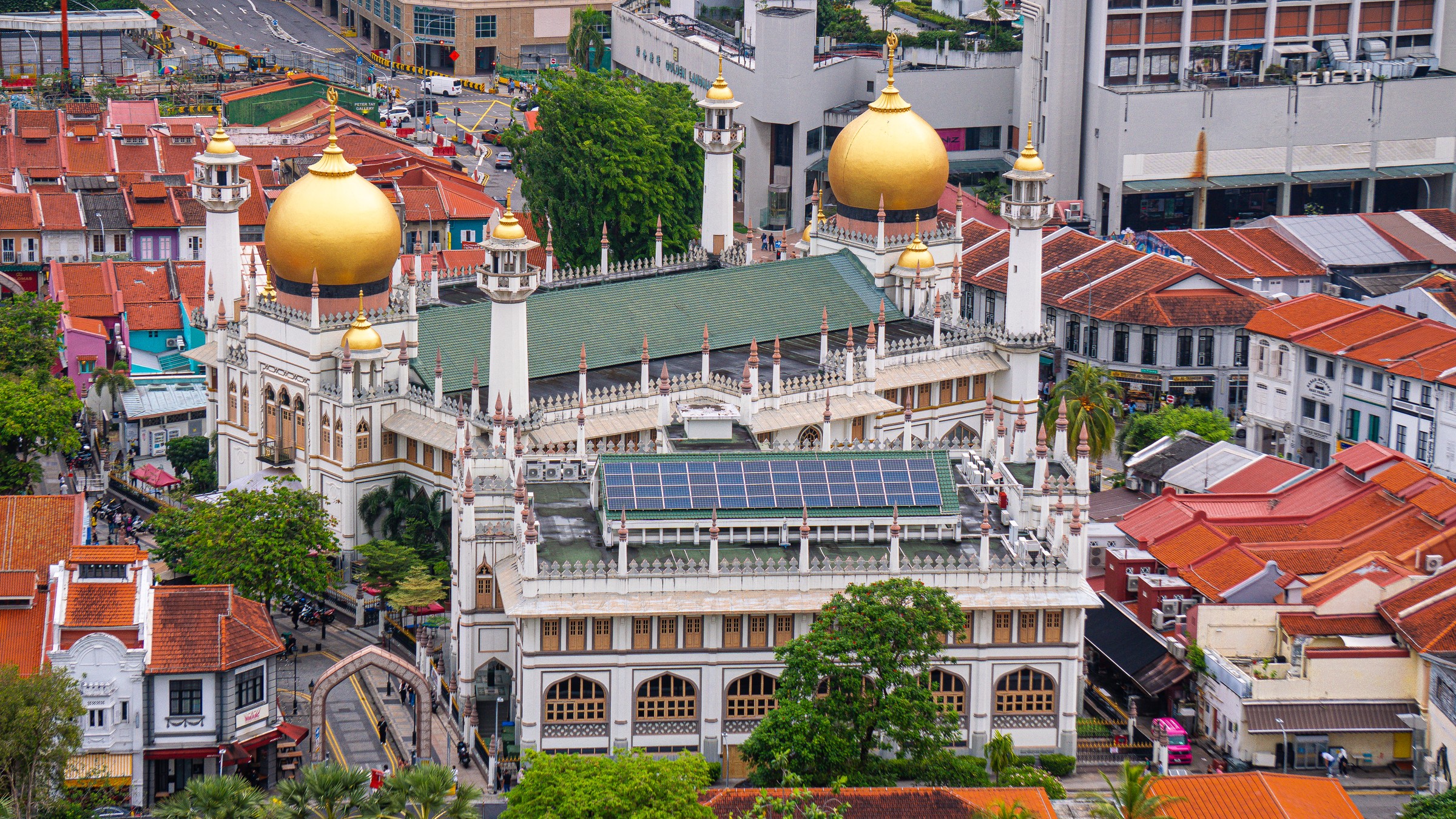
Start by noticing how the dome draws your eye along the street
Agree on a meeting point outside Bugis station and allow 20 minutes to head towards Kampong Gelam, cross roads and get your bearings. Once on Bussorah Street, resist the urge to walk straight to the entrance. Find somewhere out of the flow of people and compare the height of the dome with the shophouses on either side. Why does your eye keep returning to the same point? How do the fairly even rooflines make the dome stand out in the distance?
The Singapore Tourism Board's introduction to Sultan Mosque explains that the bases of the domes incorporate glass bottle ends donated by people with lower incomes. It is a detail that connects the golden exterior to the people who helped build it. If you cannot make it out from where you stand, keep it as something you have read about. There is no need to cross a barrier or move close to an entrance used by worshippers just to prove you have seen it.
The mosque remains part of a living faith community. People arriving and leaving are not performing for visitors, and their faces are not yours to photograph at close range without permission. If worshippers are gathering, move to a wider public space or shorten your stop. This itinerary covers the exterior only: it does not allow for changing clothes, removing shoes, registration or waiting to enter. If you do want to visit inside, check the mosque's visitor arrangements first and replace some of the later shopfront time with that visit. Adding it after the two hours does not make it part of the same short walk.
Arab Street: let one piece of fabric lead the conversation
On Arab Street, bring your attention down from the whole building to the shopfront. The National Heritage Board's record of Batik Emporium describes its connection with the street's fabric trade. This is historical background, not a promise that the shop will be open when you arrive or a reason you must buy something.
If an open fabric shop is happy to welcome you, ask to look at an item, then compare the size of the pattern with its possible uses. A large motif reads well across a whole length of cloth; what would remain of a smaller design if it were cut into a small accessory? Where rolls of fabric and finished clothing are on display, ask about the material, the unit used for pricing and how it should be washed. A batik pattern does not by itself mean something was hand-painted or made locally. Ask before touching, photographing or unfolding the fabric.
There is just as much to do without shopping. From a public walkway, look at how signs, display windows and upstairs windows share the facade. Choose two neighbouring shops, compare their frontage widths and floors, then look for differences in how they display their wares. You do not need to guess the age of every building. An open door is not an invitation to enter a stairway or private rear courtyard.
Haji Lane: compare the shopfronts without chasing every mural
Allow 20 minutes on Haji Lane, concentrating on how shops catch your eye in a narrower street. Some use colour; others rely on their products or a display by the door. Pick two contrasting fronts and describe what you noticed first, then look up to see whether the windows above still share a similar rhythm. Even if one shop is closed, its exterior can still give you something to look at.
Murals and decorations may change, so do not build the walk around a particular artwork still being there. Keep clear of shop entrances and people eating when you take photographs. If it is crowded, pass through the narrow stretch before stopping rather than treating the lane as a studio you can occupy for as long as you like. Shops do not necessarily keep the same hours either. Check separately if there is a particular item you want to find.
The National Heritage Board's Kampong Glam Heritage Trail makes useful background reading before you go. Its street names and community stories add context beyond identifying popular photo spots. You do not need to complete every stop on the official trail within these two hours.
Leave at 11:00 and return to the station at 13:00
The following is an editorial estimate for an ordinary walking pace. It starts and finishes at the same meeting point outside Bugis station; the exit you use, road crossings and crowds will affect the time needed. Travel from your accommodation to Bugis is separate. Have breakfast beforehand: this walk includes water and a short rest, with a full meal after 13:00.
| Time | Plan | Minutes |
|---|---|---|
| 11:00–11:20 | Walk from outside Bugis station to Bussorah Street | 20 |
| 11:20–11:40 | Look at Sultan Mosque's exterior and the view along the street | 20 |
| 11:40–11:50 | Move to Arab Street and find a suitable place to observe | 10 |
| 11:50–12:10 | Explore the uses of fabric or compare two shopfronts | 20 |
| 12:10–12:20 | Walk to Haji Lane | 10 |
| 12:20–12:40 | Look at shopfronts and the lane | 20 |
| 12:40–12:50 | Stop for water and a rest | 10 |
| 12:50–13:00 | Return to the meeting point outside Bugis station | 10 |
The total is 120 minutes. If the earlier part takes 10 minutes longer, reduce the Haji Lane observation stop to 10 minutes. If it takes 20 minutes longer, drop that observation stop but keep the time needed to walk through and return. Skipping a stop does not remove the distance you still have to cover. If a diversion or someone's physical condition adds substantially to the walking time, return to the station early or allow a later finish instead of rushing to make 13:00.
Decide on spending and weather before setting out
The main route has no ticketed admissions. For one adult who is not shopping, you could set your own SGD 5–10 allowance for water or a small snack, with transport fares and a full meal budgeted separately. This is an editorial allowance, not a quotation from a particular business. To fit a meal into the two hours, remove at least one shopfront observation stop and rework the plan to include ordering and waiting. A sit-down meal does not happen automatically while you are moving between places.
In the heat, look for a shaded spot where you are allowed to stop, and shorten the walk if you feel unwell. Shelter along the shophouses does not mean that every crossing, lane or part of the route will keep you dry. During a thunderstorm, get out of the open; do not assume a religious site is somewhere you can freely enter to take shelter. Before sitting in a business's seating area, check whether you need to make a purchase.
For another way to read the city, a separate walk from Chinatown to a riverside lunch offers a different theme: the relationship between shophouses and the river port. Today, stay with Kampong Gelam and give two or three observations your full attention. Use a map of Bugis and Kampong Gelam to place your starting point before you set out.