Four hours in Little India: community stories at the heritage centre, then a little market browsing
Start with a question from the street, look for context at the Indian Heritage Centre, then return to the market with something new to notice. This route gives time to the migration and everyday lives of South Asian communities. You need not identify every garland, spice or garment, or treat Little India as a display of a single culture. Reading a few objects carefully is more rewarding here than photographing every case.
Begin outside Little India MRT Station, visit the Indian Heritage Centre on Campbell Lane, browse and have lunch at Tekka Centre, then walk to Jalan Besar Station. The example runs from 10:00 to 14:00, with admission queues, gallery time, walking, food and breaks included. Travel to the starting station and onwards from the final station is additional. Walking allowances are editorial estimates, not measured directions: check a map and signs before leaving the station, and adjust to a pace you can comfortably sustain.
Check that the heritage centre is open before choosing your day
The museum is the reason for this route. Its visitor information lists Tuesday–Sunday opening from 10:00 to 18:00, with last admission at 17:30. It closes on Mondays, including public holidays that fall on a Monday, unless otherwise announced. Check the centre's opening information and current programmes before you go. Festival arrangements can differ from ordinary weekday or weekend visits.
Festival open houses may offer free entry or longer opening hours. Check the applicable dates and conditions in the current announcement; neither benefit should be treated as a year-round arrangement. This daytime plan does not include performances, assembling for a guided tour or paid workshops. If a particular event is your main interest, rebuild lunch and gallery time around its schedule rather than adding it to the table below.
Check eligibility, ticket types and any separate exhibition charges on the official admission page. Seeing the word “free” does not necessarily mean you qualify. If the centre is closed for the whole day, choose another day for this route. If only your preferred gallery is unavailable, decide whether the remaining displays still justify a visit and narrow your reading choices accordingly. A day of shopping and eating would be a different outing, not a completed version of this museum itinerary.
How the four hours fit together
The clock starts at a safe place to stop outside Little India Station and ends at an entrance to Jalan Besar Station. No particular exit is presented as the shortest, and the route is not guaranteed to be step-free. If anyone in your group needs accessible routes, check suitable entrances and road crossings with the stations and venue in advance.
| Time | Plan | Minutes |
|---|---|---|
| 10:00–10:15 | Get your bearings outside Little India Station and walk towards Campbell Lane | 15 |
| 10:15–10:25 | Look briefly at the streets around the centre and choose a question to take inside | 10 |
| 10:25–10:40 | Check tickets, buy or validate admission, and allow for waiting | 15 |
| 10:40–11:55 | Read selected displays on migration, everyday objects and community stories | 75 |
| 11:55–12:10 | Leave the galleries and find a suitable place for water and a break | 15 |
| 12:10–12:20 | Walk to Tekka Centre, using the crossings available on site | 10 |
| 12:20–12:40 | Browse a small part of the market or shops, depending on what is open | 20 |
| 12:40–13:25 | Choose lunch, queue and eat | 45 |
| 13:25–13:30 | Take a short break and check the direction to Jalan Besar Station | 5 |
| 13:30–14:00 | Walk, wait at crossings and locate the station entrance to finish | 30 |
That makes 240 minutes. The final half-hour is reserved for reaching the station, not for adding another attraction. Use the Singapore city map to understand the stations' relative positions, then check a pedestrian route that is open on your travel day. Two stations looking close on a map does not mean you can walk directly across roads or through buildings between them.
Ten minutes of street scenes, with a question in mind
On the way to Campbell Lane, confirm the centre's address: 5 Campbell Lane. If you pass garland, spice or textile shops, there is no need to enter them all. Choose one material that interests you and notice how it is sorted, displayed or used. If you do not understand its purpose, keep the question for the galleries instead of assigning a religious meaning from its colour or shape.
These ten minutes retain the pleasure of a neighbourhood walk: looking closely at a few colours and materials rather than trying to cover every street. Shops are working places and part of people's daily lives. Ask before photographing vendors or customers, and keep entrances and narrow passages clear. The route does not include entering a temple or mosque, or assume a religious ceremony will be open for visitors to watch. For a separate visit, confirm that particular place's opening arrangements and rules, and allow additional time.
Use the gallery visit to follow three threads
Once inside, check the gallery map and the areas open that day. The 75 minutes include movement around the building, so you will not have time to read every display. Three questions can help you choose: where did people come from, what did they bring, and how did they build lives in Singapore? Pick an object or story for each that interests you. If one subject draws you in, it is fine to leave another for a future visit.
Begin with migration. If maps, photographs or personal records are on display, read the person's place of origin, the period and the circumstances of their arrival before comparing stories. The centre covers Singapore's Indian and South Asian communities; do not assume everyone shared a homeland, language or faith. The centre's curatorial writing also draws attention to diversity within these communities. That is a more useful insight to carry outside than a memorised list of place names.
Next, choose an everyday object: a garment, a piece of craftwork or a household item on display. Read its label for the user, purpose and provenance, then think back to the materials you noticed in the street. Similar appearances need not mean identical uses. Leave unanswered questions open rather than supplying details the label does not give. For the third thread, look at how people established lives locally. Read one story through personal recollections, associations, education or public life, so that a broad idea of “community” connects with an individual experience.
These are ways to choose what to read, not promises of particular objects on view. Collections rotate, loans change and some areas may be unavailable; follow the labels and information on site. Avoid going repeatedly between floors in search of an item you saw in a photograph. Keep the following fifteen minutes for leaving, water and a pause. Do not eat or drink in the galleries; follow staff directions to a suitable place to rest, without assuming a seat will be free.
At Tekka Centre, browse what is actually open
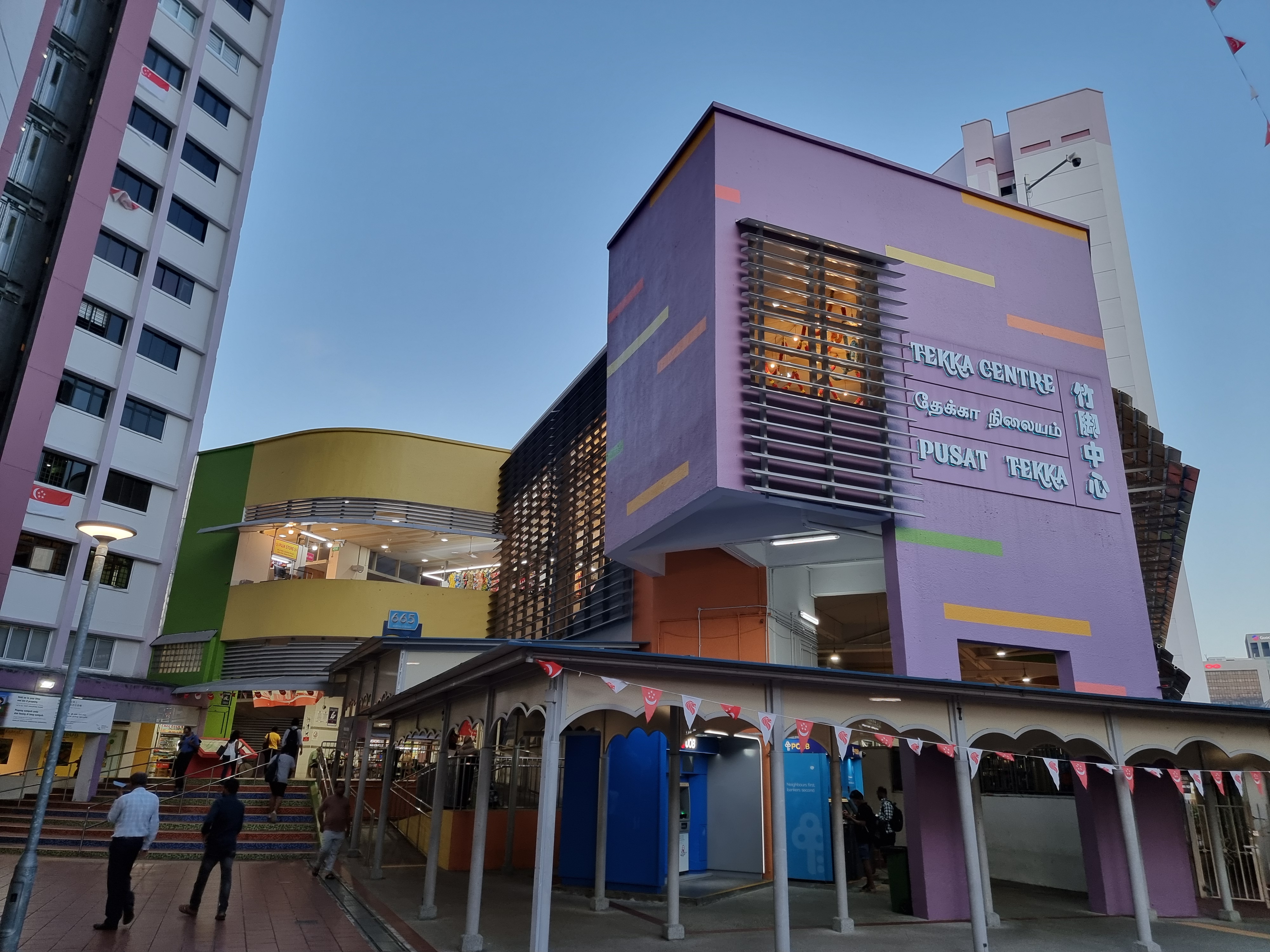
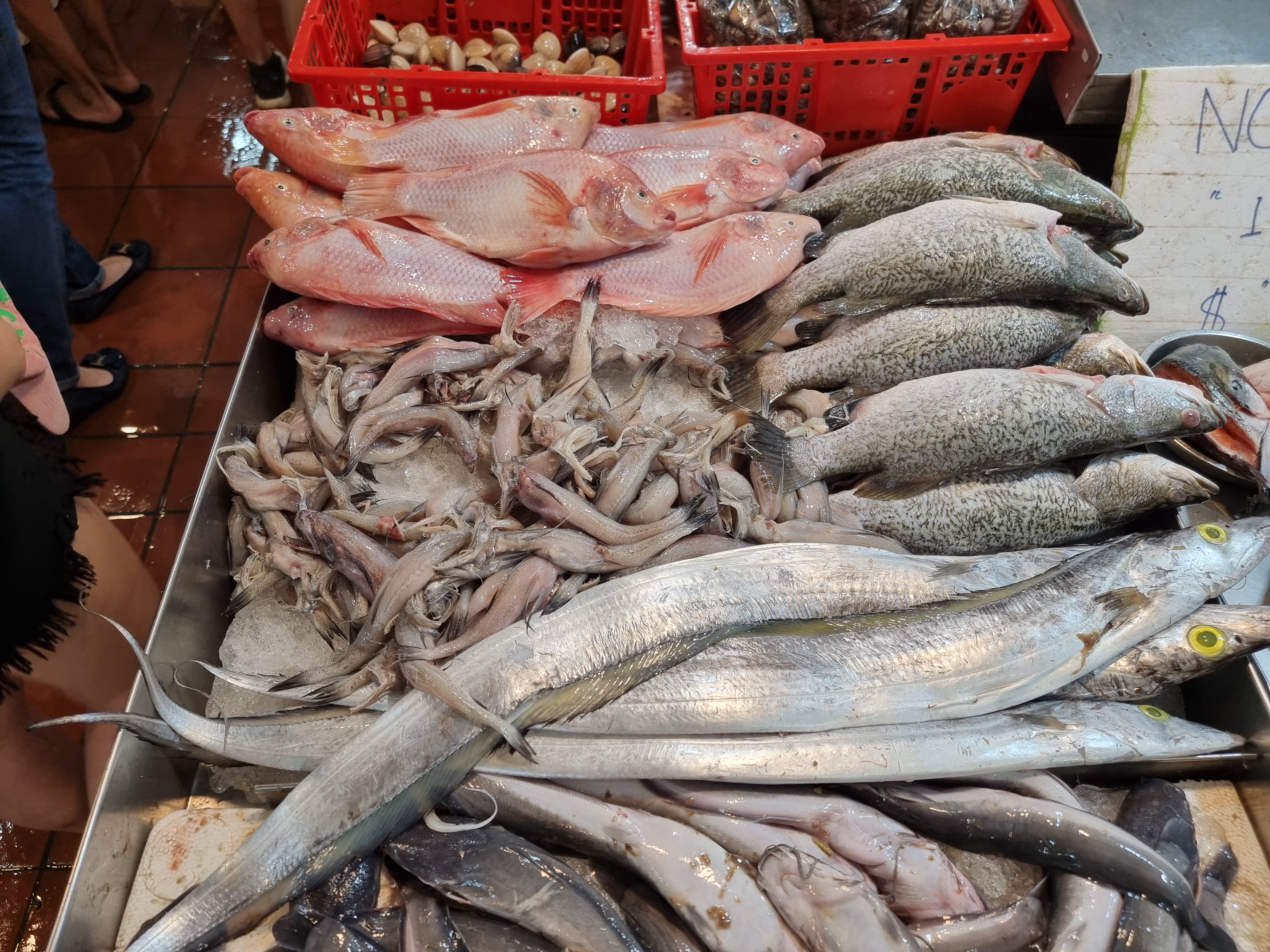
Allow ten minutes from the heritage centre to Tekka Centre at 665 Buffalo Road, including crossings and finding an entrance. The complex brings together a market, food stalls and shops, so there is more than one way to spend your browsing time. If fresh-food stalls are still trading, choose a small stretch and notice how goods are arranged and customers make their choices. If many have packed up, look at shops that remain open or move straight towards lunch instead of circling every aisle to complete a list.
This schedule reaches the market around midday. It does not promise the fullest selection of fresh-food stalls. Traders keep their own hours and days off, and information about the whole centre cannot guarantee every business will be open. Watch the paths and floor conditions, avoid lingering where you obstruct trade, and ask before photographing people. Other people's ordinary shopping is not a performance.
Check the NEA market and hawker-centre closure table before setting out. Tekka Centre has scheduled cleaning closures, so compare the official table with your intended day. Other dates do not guarantee that every stall will trade. If the whole centre is closed, choose another day to follow the complete route. If you still want to visit the museum that day, find an alternative lunch place whose opening you have checked and revise the walking plan in advance; passing a closed market does not count as visiting it.
Give lunch its own time
Within the 45-minute lunch period, allow fifteen minutes to choose food, queue and find a seat, followed by thirty minutes to eat. Check prices, portions and your dietary needs before ordering. You do not have to join the longest queue. This is one lunch, not a challenge to sample multiple stalls; an extra dessert or drink can also involve waiting.
You might start with a personal allowance of SGD 10–15 for food and drinking water, then adjust to displayed prices. This is a planning amount, not a stall quotation or a promise of a particular set meal. Add the actual museum admission and transport costs separately. Keep five minutes afterwards to pause, organise your belongings and check the station direction, rather than starting to look for a map at the crossing.
If you are ten or twenty minutes late, cut browsing first
If admission or the museum visit takes ten minutes longer, reduce Tekka browsing from twenty minutes to ten. If it takes twenty minutes longer, skip browsing and prepare for lunch when you arrive. This protects the post-gallery break, 45 minutes for lunch and the final thirty minutes to the station, without disguising the delay by walking faster. If the delay only starts in the lunch queue, you cannot reclaim browsing time you have already spent. Four hours may then be insufficient: choose a shorter queue or accept a later arrival at the station rather than sacrificing your meal or safe crossings.
Under the normal schedule, leave Tekka Centre at 13:30 for Jalan Besar Station, following a map and using legal crossing points. Do not add a temple, mural stop or another mall on the way. If you expect to need more than thirty minutes to reach the station, shorten the earlier browsing period and leave sooner. Closures, thunderstorms or feeling unwell are also reasons to find a safe place and change or stop the outdoor part. An open museum does not imply a sheltered route all the way.
This outing does not continue to Bugis or Kampong Gelam, or detour to Chinatown and the river. On the way back, recall one migration story you read and how it changed your understanding of a shop display or the market. That is enough to connect the galleries with the neighbourhood; adding more stops is not necessary.