Merlion to Esplanade in two hours: get your bearings around the bay
On your first visit to Marina Bay, photographing every landmark need not be your first priority. Start by noticing where the water opens out and which banks the bridges connect. Then place the Merlion and Esplanade in that scene: a little time spent finding your bearings makes later city plans easier. This short walk starts outside Raffles Place station, passes through Merlion Park and takes in the exterior of Esplanade before finishing at Esplanade station. It does not circle the entire bay or enter ticketed venues.
It suits anyone with two hours to spare who wants an outdoor introduction to the city’s shape. If artworks and exhibitions are your main interest, choose the National Gallery half-day route instead. Leave large luggage in storage before setting off; stopping for waterfront photographs and finding entrances is awkward when you are hauling bags against the clock.
Find the river mouth before posing for a photograph
Walk from outside Raffles Place station towards Merlion Park, using the Fullerton area and pedestrian signs to orient yourself. Allow 20 minutes for this stretch, including crossings, checking directions and finding somewhere to stop. Approaches differ by station exit, so the station name alone is not a precise meeting point. Agree on a place outside the station with your companions, then start the clock together.
The Singapore Tourism Board’s Merlion introduction explains that the fish body recalls the early fishing village, while the lion’s head refers to the name Singapura. First notice how the two parts join, then step farther back and look at the water the statue faces. Understanding those details makes the symbol more memorable than treating it only as a backdrop.
The tourism board also records that the statue was moved after a bridge affected its visibility. That suggests a second way to look: how does the relationship between statue, bridge and distant buildings change when you move? Compare two public viewpoints where you will not obstruct pedestrians. There is no need to step into the road or cross a railing for a complete composition. Water flow, maintenance and barriers can change; even without the water jet, the statue’s position by the river mouth is worth observing.
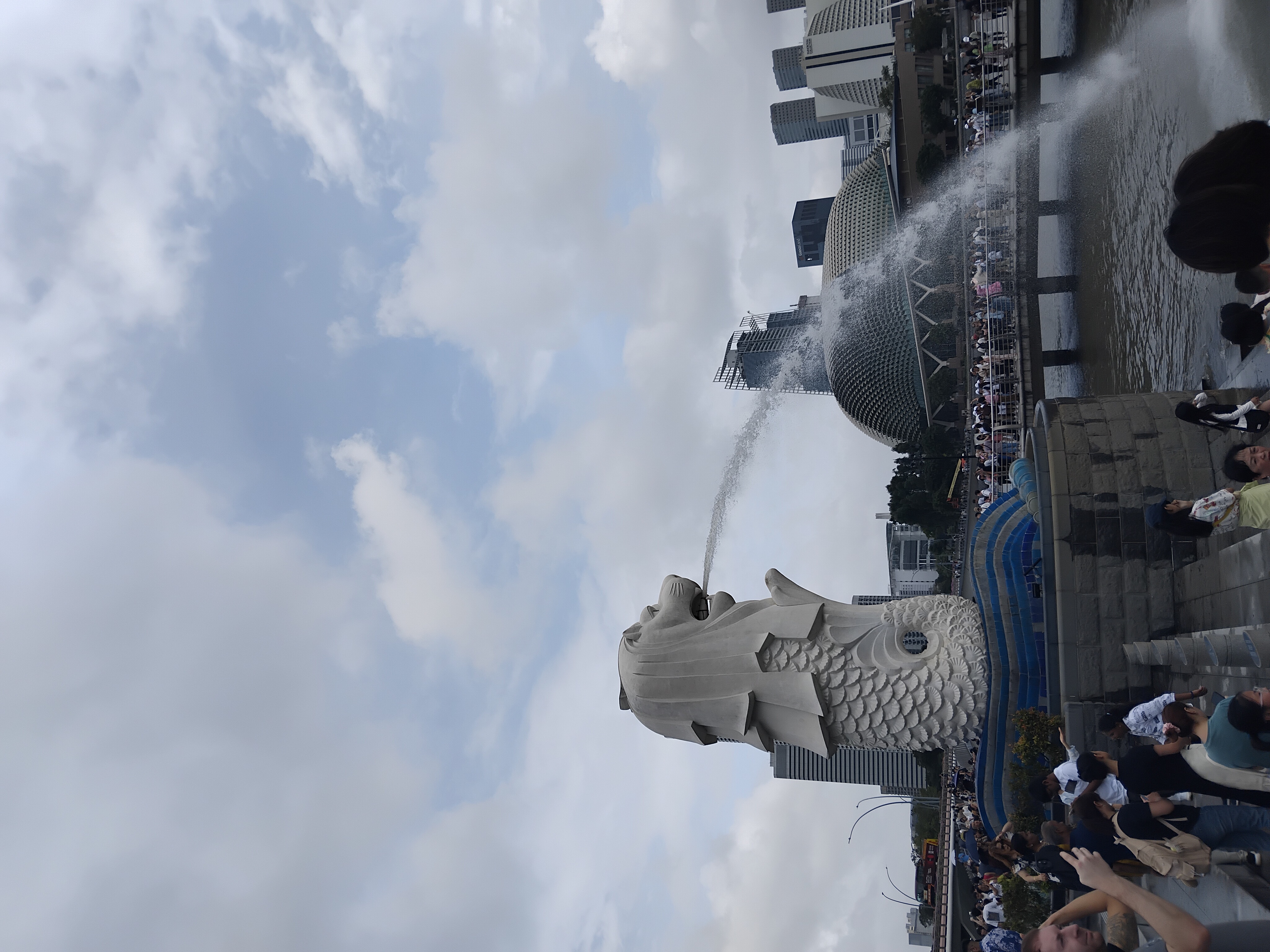
Cross to the other bank and watch the view change
Leave the Merlion along an open pedestrian route towards Esplanade, checking signs at the bridge approach and the crossing arrangements first. Allow 20 minutes. Do not run to recover time spent taking photographs or cut straight through traffic. If a route is closed, establish which way remains open. If the detour takes longer than your allowance, shorten the exterior viewing stop that follows.
At a safe place to pause, look back for the bank where you were standing. The buildings appear smaller while the bay feels wider: a useful reminder that places close together on a map still take time to walk between. Each person can point out one fixed landmark and say which side of the river it stands on. You do not need to memorise every building’s name to make sense of this part of the walk.
Esplanade: what are the spikes for?
At Esplanade, compare the broad curved shape with the small repeating elements on its surface. The venue’s architecture page explains that these aluminium sunshades sit over double-glazed roofs to control light and keep out heat. The nickname “durian” is easy to remember, but look a little closer: how does the orientation of the same element change across a curved surface?
Study the light and shade on a small patch of the shell, then look at the whole building again. Up close, you see tightly packed individual units; from farther away, they form a textured outline. You can do this from public areas without buying a performance ticket or entering a concert hall. Do not enter work areas, climb the elements or block entrances to get a close-up photograph.
Keep 10 minutes for water and a rest, then follow the venue’s transport directions towards Esplanade station on the Circle Line. The station and arts centre do not share an entrance. The venue’s getting-here page lists indoor and outdoor approaches from both City Hall and Esplanade stations. Choose a route that suits you; if you need a lift, check the accessibility signs on site instead of taking unsuitable stairs just to keep to the schedule.
The full two-hour schedule
This example runs from 09:00 to 11:00. The minutes are editorial estimates for an ordinary walking pace and include walking, viewing and rest, but not train travel to and from your accommodation. Eat breakfast beforehand. No full meal is planned during the walk; leave lunch until afterwards.
| Time | Plan | Minutes and limits |
|---|---|---|
| 09:00–09:20 | Outside Raffles Place station to Merlion Park | 20 walking, including directions and crossings |
| 09:20–09:45 | Statue, river mouth and two viewpoints | 20 viewing, 5 moving within the area |
| 09:45–10:05 | Open pedestrian route towards Esplanade | 20 walking |
| 10:05–10:30 | Observe the shell and the bay’s layout | 25 viewing; no performance |
| 10:30–10:40 | Drink water and sit down | 10 resting |
| 10:40–11:00 | Walk to an Esplanade station entrance | 15 walking, 5 spare for finding the way |
The total is 120 minutes. If the earlier stages run 10 minutes late, reduce the Esplanade viewing stop from 25 to 15 minutes. If you lose 20 minutes, reduce it to 5. Keep the rest and return walk. Beyond that, accept a later finish or end the outing early; arrival at the station by 11:00 is no longer promised. You do not need to add half a circuit of the bay to fill any time left over.
Spending, rain and crowds
The main route uses open public paths and building exteriors, with no ticketed admission planned. For one adult carrying water and doing no shopping, set aside SGD 5–10 for extra water or simple refreshments, plus the actual return transport fare. This is a spending allowance, not a quoted price from shops on the route. It excludes full meals, cruises and all performances.
If heavy rain, lightning or heat makes you uncomfortable, skip the outdoor viewing and follow local signs to a suitable indoor public space for a break, or return directly to the station. This two-hour route does not guarantee continuous shelter. Buying a performance ticket simply to escape the rain is also a poor fit if you cannot stay for the whole show. In crowds, work out the directions first and take photographs somewhere less busy. Avoid waiting on a bridge or narrow path for a shot with nobody in it.
To combine architecture with artworks, see the half-day route through selected gallery works and bay architecture. This shorter walk is about understanding the bay; you need not repeat every part of both routes. Check your starting point and return journey on the Singapore map before setting out.