Four hours around Guang Hua and Huashan: compare technology, then explore a former factory
Syntrend and Guang Hua stand next to each other, but visiting both need not mean working through every floor. Choose one subject you actually want to understand—photography, audio or computer accessories, for example. See how products are presented at Syntrend, then use Guang Hua to ask more specific questions about models, accessories and after-sales support. At Huashan, shift your attention from new products to old buildings: how do spaces once used for manufacturing accommodate exhibitions, shops and people taking a walk?
This four-hour route begins outside Zhongxiao Xinsheng MRT Station, visits Syntrend, Guang Hua and Huashan in that order, and returns to the station exterior. It suits visitors with one comparison in mind who are willing to stop shopping at an agreed time. Computer assembly, repairs or a full hands-on session need a separate allowance. The route is not continuously indoors: leave time for outdoor walking and crossings between the malls and on the way to Huashan.
Decide what you want to know, then check each venue separately
Before leaving, note your intended use, spending limit and two or three things to compare. For headphones, think about where you will mainly use them. For computer accessories, bring the model details of your existing equipment. You can then ask whether a product solves your problem instead of following every display that catches your eye. Buying nothing is a perfectly reasonable outcome; you can simply take your comparison notes home.
Syntrend's customer-service page lists opening hours of 11:00–21:30 from Sunday to Thursday, and until 22:00 on Fridays, Saturdays and the eve of public holidays. This example starts at 11:00; arriving earlier does not mean the shops will be ready for you. Check individual events, demonstrations and experiences separately. They may require reservations, payment or a particular time slot, and are not guaranteed within an ordinary browsing visit.
For Guang Hua, pay attention to which operator an announcement covers. The Taipei City Market Administration Office lists 11:00–21:00, closure on the last Tuesday of each month, and advises checking public-holiday closures with the traders' association. The fourth- and fifth-floor association lists the same regular hours and monthly Tuesday closure, plus a break from Lunar New Year's Eve through the fourth day of the new year. That association's notice concerns floors four and five; it is not a holiday calendar for every floor and shop. Contact a particular retailer directly if your visit depends on its being open or providing a service. If Guang Hua is closed, change the day or make this a shorter Syntrend-and-Huashan outing rather than arriving with the full shopping plan unchanged.
Huashan's park information distinguishes outdoor access from indoor opening arrangements. An open outdoor area does not mean every gallery, shop or passage is accessible. This route uses the public spaces and building exteriors that are open on the day; no particular exhibition, performance or interior visit is essential to it.
Syntrend: follow one subject, not every display
Allow ten minutes from outside Zhongxiao Xinsheng Station to Syntrend, following pedestrian signs on site. If you need lifts or less walking, check the available exits, lift locations and whether the approach suits your needs before you go. Ten minutes is a planning allowance, not an assurance that the entire route has no steps.
Spend 45 minutes at Syntrend on your chosen subject. Start with the situations the displays suggest, then ask which features you would actually use. Note models worth comparing further, included accessories and the retailer's explanations. If a demonstration is available, ask about its rules and waiting time before deciding how much of this visit to give it. Waiting for a turn should not quietly consume the time reserved for payment and lunch.
Look at how the products are presented as well as at their specifications. Are they shown alone or as part of a complete setup? Which differences can you understand on the spot, and which still need research? Take those questions to Guang Hua, without assuming that the same models will be in stock there. Ask the shop before photographing products, screen content or other customers; written notes may be a better way to record a comparison.
Guang Hua: compare like with like and leave time to finish a purchase
Syntrend and Guang Hua are separate shopping venues. Allow five minutes to move between them, following the available pedestrian route. Being neighbours does not establish an indoor shortcut.
Use Guang Hua's 40-minute browsing period to find relevant counters and ask the same questions. Does a quoted price include the accessories you need? Are you comparing the same model and version? Who handles the warranty, and what are the return or exchange conditions? A lower number is only meaningful when you know what it includes. Do not judge prices by the name of the mall alone. Ask the shop you would buy from about its warranty and after-sales arrangements; record anything unresolved and confirm it before deciding.
At 12:40, stop adding new options. The next 20 minutes are for checking the model, quantity, price and purchase documents, paying, and organising your bags if you have decided to buy. If you remain unsure, leave the purchase for later. If you are not shopping, use this time to organise your notes and work out the next part of the route rather than starting another tour of the floors.
This allowance does not guarantee completion of repairs, computer assembly, data transfers or a complicated return. Ask how long such work needs and consider arranging it separately. Carrying a large item or several bags around Huashan may also be uncomfortable. Finishing early to put your purchases somewhere suitable is a reasonable choice.
After lunch, see how Huashan's old buildings accommodate new uses
Reserve 40 minutes from 13:00 for lunch, including finding a seat, ordering, waiting and eating. Choose somewhere open, within your budget and without a long queue. No restaurant or immediate seating is guaranteed. If the queue would leave too little time to eat, change your choice instead of reducing lunch to a few hurried bites.
Allow 12 minutes to reach Huashan afterwards. Crossings, diversions and weather can change the time required; use the pedestrian routes available that day and do not cross traffic to catch up with the schedule. Once there, spend 48 minutes linking a few places where you can stop and look, using open public paths rather than trying to enter every building.
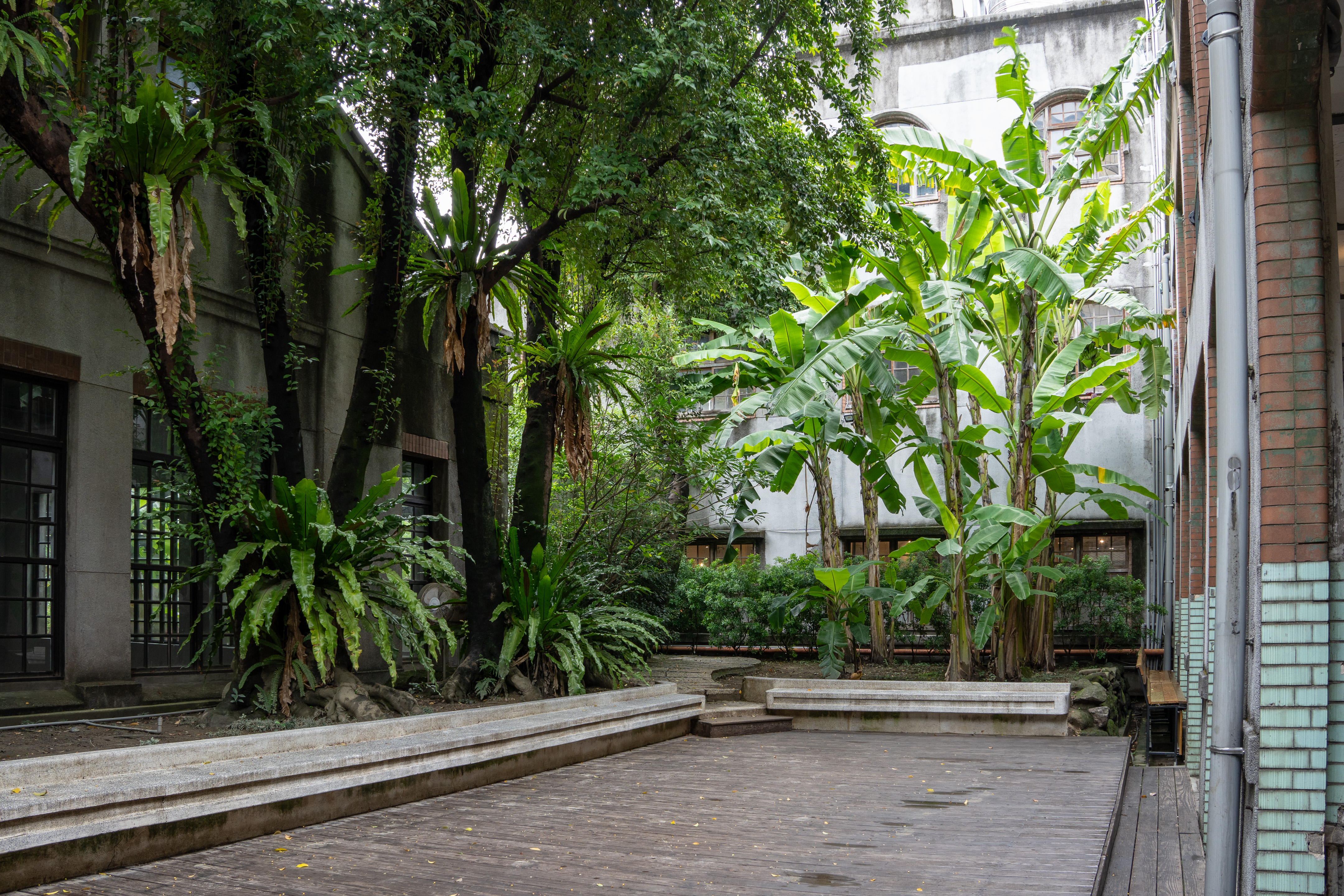
Huashan's official history describes both former Taipei winery and camphor-factory spaces that later became a place for the arts. It is therefore misleading to assume that every building had the same winery function. Begin with what is visible: how do doorways, windows, walls and the spaces between buildings help you find an entrance, pause or move on? How do present-day event signs and shop entrances fit the proportions of the older buildings?
In the morning, you considered how a product is displayed. Here, ask how a new use becomes apparent in an old space. You do not need to date every building or guess its former manufacturing process from its appearance. If a gallery is closed or hosts a ticketed event, stay in the accessible public areas. Do not cross barriers, enter working areas or assume that a room visible through glass is open to visitors.
If an exhibition particularly interests you, check its admission arrangements, price and the time it needs, then revise the plan around it. This four-hour schedule has no extra allowance for a complete exhibition visit. It also does not continue to the memorial grounds or another creative park: Huashan is the slower, observational end to a shopping outing.
Four hours, with a shopping cutoff and a protected return
| Time | Plan |
|---|---|
| 11:00–11:10 | Meet outside Zhongxiao Xinsheng Station and follow the pedestrian route to Syntrend |
| 11:10–11:55 | Explore one technology subject at Syntrend; look, ask questions and take notes |
| 11:55–12:00 | Walk to Guang Hua, allowing for entrances and crossings |
| 12:00–12:40 | Compare the same criteria at Guang Hua rather than touring every floor |
| 12:40–13:00 | Stop adding options; check, pay and pack, or organise your notes |
| 13:00–13:40 | Lunch, including finding a seat, ordering and waiting |
| 13:40–13:52 | Walk to Huashan |
| 13:52–14:40 | Observe the former industrial buildings and their current uses from open public areas |
| 14:40–14:50 | Rest where stopping is allowed and check the return direction |
| 14:50–15:00 | Return to the exterior of Zhongxiao Xinsheng Station and finish |
The total is 240 minutes. These are editorial estimates, not times measured on a walk. The final ten minutes aim to get you back outside the station; reaching the platform or boarding a train is additional. Your restaurant's location, shopping services and conditions on the day can all change the actual timing.
If shopping or lunch takes ten minutes longer, remove ten minutes from Huashan; if it takes 20 minutes longer, remove 20. Do not squeeze payment checks, rest or the return by hurrying. With a delay of more than 20 minutes, heavy purchases or unsuitable outdoor weather, omit Huashan and leave after organising your belongings. If the return itself will take longer, shorten the Huashan stop and depart earlier. Seeing one fewer place is preferable to rushing onwards with a purchase still unresolved.
Keep everyday spending separate from your shopping budget
Paid exhibitions and experiences are not required by this route, but the day will still have costs. Treat transport, lunch and drinking water as one budget, and product purchases as another. Set limits for each, then decide using actual prices. Plan meals and purchases around the day's displayed prices and your own budget; when you see a product demonstration, ask whether it costs anything or needs a reservation.
If completing a carefully considered purchase is the main purpose of your visit, leaving the second half flexible is useful. If you simply want to browse, use the two malls to understand products, then see how old spaces are being reused at Huashan. Before leaving, use the Taipei city map to locate the three places. On site, adjust to actual openings and pedestrian signs. These four hours are about choosing what to compare and notice, not collecting every counter and gallery.