Four hours in Yuanshan: choosing art at TFAM, then looking through a temple courtyard
A museum and a temple both invite you to look, but they ask you to look in different ways. At an art museum, a single work can hold your attention. At Taipei Confucius Temple, gates, courtyards and the main hall shape how you approach the buildings. This half-day walk links those two experiences in Yuanshan: choose a group of galleries at Taipei Fine Arts Museum, have lunch, then explore the layers of the temple's outdoor spaces. It does not add Baoan Temple, Lin An Tai Historical House or Daan Park, and you do not need to visit every museum floor.
The plan suits people who enjoy reading artwork labels and noticing architectural details. If you have already chosen a special exhibition that needs two or three hours, give the museum its own outing and save the temple for another visit. With young children, or if you need frequent breaks, choosing just one venue from the outset is equally reasonable.
Check which spaces are open before choosing an exhibition
Taipei Fine Arts Museum usually opens at 09:30 from Tuesday to Sunday, closes on Mondays and has extended hours on Saturdays. Just as important, its hours, tickets and visitor information distinguishes the building's opening hours from access to individual floors. Check the floor-opening notice before you go: some floors may be temporarily closed, and an open museum does not mean every gallery is accessible. Use the current-exhibitions page to choose something that interests you and is actually open, then confirm entry and ticket arrangements.
One option, if it is still running when you visit, is Wang Ya-Hui's exhibition 王雅慧:旅行者 on the second floor. Confirm the exhibition dates and access before setting out. Its connections between everyday space, nature and ways of seeing fit well with the courtyard visit later. The plan allows you to select a group of works; it does not suggest that 80 minutes is enough for the entire exhibition. Once that run has ended, choose another open exhibition. If the available galleries do not interest you, you can decide not to buy a ticket and spend the outing on the temple and a neighbourhood lunch instead. There is no need to look at art you do not want to see just to fill a slot in a table.
The temple's visitor information lists free admission from 08:30 to 21:00, Tuesday to Sunday, with Monday closure. The note at the end specifically limits those hours to the outdoor grounds. It does not promise access to halls, the theatre or service counters throughout that period. This walk uses daylight to explore courtyards and visible architecture; entering a hall or watching a film is not a requirement.
Divide the four hours, including lunch and a break
Start outside Yuanshan station at 09:40 and return outside the same station at 13:40. MRT travel from your accommodation and onward travel after the walk are separate. The museum's official directions lead from Exit 1 through the Yuanshan area of Taipei Expo Park towards Zhongshan North Road, Section 3. The street-walking times below are editorial allowances, including crossings and finding your way, rather than measured journey times. Adjust them to your pace.
| Time | Plan | Minutes and limits |
|---|---|---|
| 09:40–10:00 | Walk from outside Yuanshan station to the museum | 20 walking; follow the day's access signs |
| 10:00–10:10 | Read opening notices, buy a ticket and store belongings | 10 waiting; do not assume immediate gallery entry |
| 10:10–11:30 | Explore a selected group of galleries | 80 viewing; no separate full guided tour |
| 11:30–11:40 | Drink water in a permitted museum rest area | 10 resting; leave the galleries before drinking |
| 11:40–12:15 | Walk to the neighbourhood around the temple | 35 walking, including crossings and orientation |
| 12:15–12:55 | Lunch at an open place without a long queue | 5 waiting and 35 eating |
| 12:55–13:30 | Temple courtyards and the exterior of Dacheng Hall | 35 viewing, within the open areas |
| 13:30–13:40 | Return outside Yuanshan station | 10 walking |
That totals 240 minutes: 115 viewing, 65 travelling, 15 waiting, 35 eating and 10 resting. Choose lunch somewhere with available seats and a suitable menu that day. The 35-minute meal slot is not suited to a booked set-menu experience or food that takes a long time to prepare.
Eighty minutes at TFAM: choose three works and look twice
The museum's exhibition introduction offers a useful starting point. The work titled 《一個人的房間》 uses a miniature room and video installation to alter the sense of spatial scale; 《葉洞》 brings holes in leaves and architecture into the same act of looking. First check which works are available and where they are, then consider how something small can make a large space feel unfamiliar. These are prompts for choosing works, not a promise that every installation will be available for interaction that day.
With the first work, ask yourself whether size, light or distance is shaping your understanding of the space. With the second, notice how a nearby edge frames something farther away. Finally, look at notes or sketches in the artist's archive, connecting the finished work with the thinking behind it. You could divide the 80 minutes into 10 for entering and finding your bearings, 20 for each of two works, 20 for the archive and a second look, and 10 moving between spaces. That is a viewing plan, not a guarantee about video lengths or completing every experience.
If the works have changed, take the gallery guide, read the introductory text and identify the question the exhibition is asking. Then choose three works that make you want to stop. You do not have to understand all three: try one that feels approachable, one that puzzles you and one that brings an experience of your own to mind.
On the first look, leave the long interpretation text aside and notice size, materials, sound or your distance from the work. On the second, read the title, medium and background, and see whether the words change your initial response. Could an apparently ordinary object become a question about labour or memory once you know its materials or how it was made? This is a looking exercise, not a claim that a particular object is in the current display.
For video works, check the running time first. Watching a minute of a long film does not mean you have seen the whole thing, but wanting to finish it should not quietly consume lunch. Choose another work that fits this visit if necessary. Asking each companion to name one detail they actually saw before discussing interpretations often opens a better conversation than simply asking whether they liked it.
Museum rules prohibit food and drink in galleries, and backpacks and large items must be stored as required. Follow the signs for photography, interaction and note-taking. The viewing allocation includes reading and moving around, but not every activity or guided tour. See the museum's visitor rules.
Thirty-five minutes at the temple: gates, courtyards and roofs
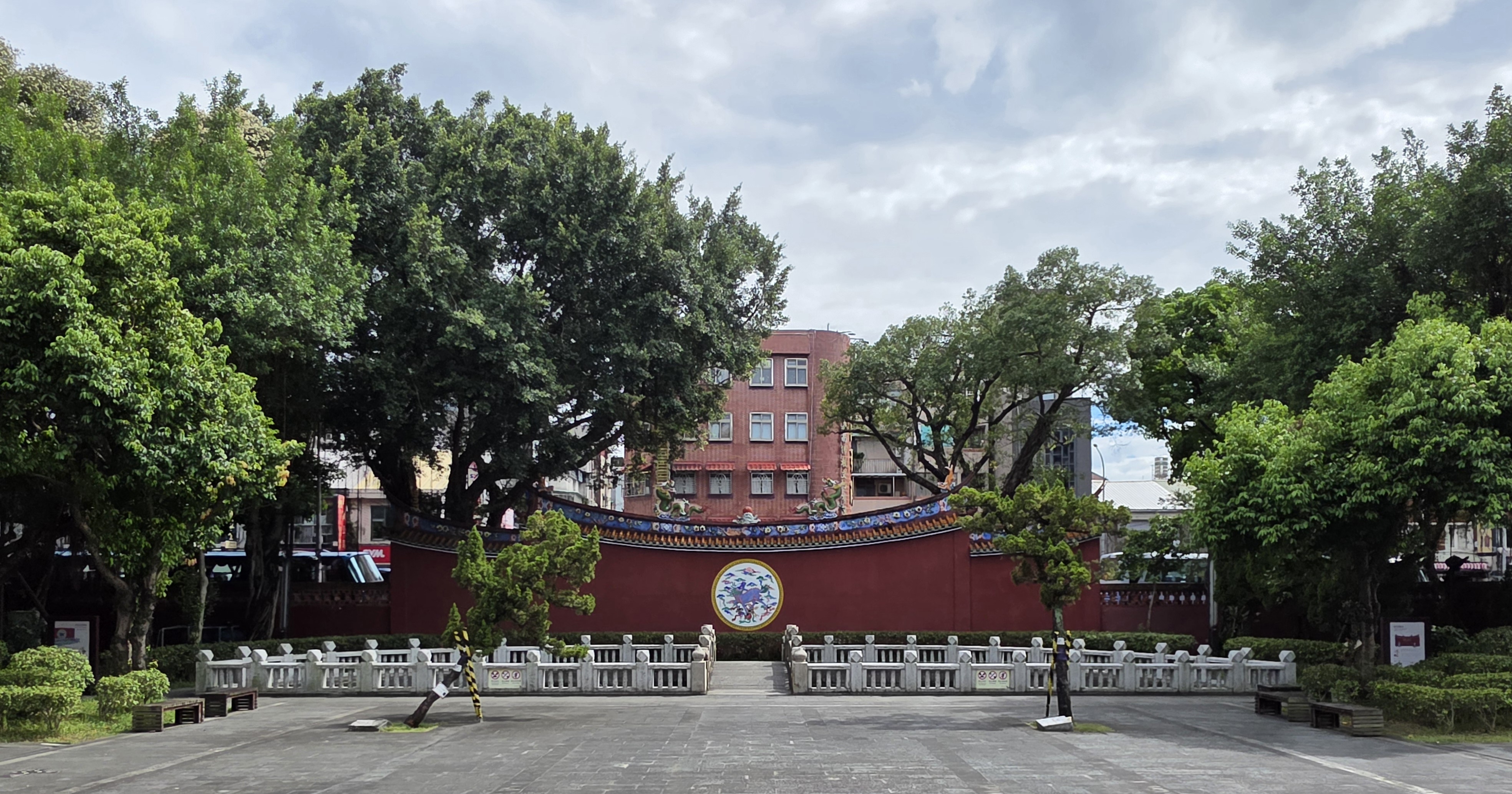
Once inside the grounds, identify the open route that day rather than chasing the exact spot from an online photo. Look from a gate into the courtyard and see how successive spaces overlap. Then move to one side: buildings that seemed aligned begin to separate. After concentrating on individual works at the museum, widen your view to take in relationships between buildings.
The temple's official description places Dacheng Hall in the centre of the courtyard on a raised platform, with a double-eaved hip-and-gable roof and carved stone dragon columns in front. Spend about 15 minutes on three things: how the courtyard's open space sets off the hall, how the two tiers of eaves cast shadows, and how the carving projects from the stone columns. You can see these physical details without memorising every architectural term. See the description of Dacheng Hall.
Use the final few minutes indoors only if the hall is open and visitors are allowed in that day. Otherwise, complete your observations in the courtyard. If a ceremony or activity is taking place, give its participants room; the courtyard is not an empty photo studio. Do not touch or climb the carvings, or occupy entrances. Being able to see the main hall is different from being allowed onto every step.
When you are late, it rains, or you want more time with the art
Treat 11:30 as the point to decide whether to leave the galleries. If you want to keep looking, drop the temple and retain lunch and the return journey. You should not have to watch the clock throughout an exhibition. If tickets or storage simply took an extra 15 minutes, reduce your selection to two works while keeping water and lunch. Do not take that time out of the walking allowance.
If lunch is still going at 12:55, shorten the temple visit to 20 minutes for the courtyard and hall exterior, and reassess the return to the station. If heavy rain makes walking between the venues unsuitable, complete just one venue. A taxi or bus alternative needs its own route, waiting time and fare check; changing transport does not take zero minutes.
Budget for the visit, then choose what comes next
For one adult paying the ordinary rate, excluding separately ticketed special exhibitions, the museum's ticket page lists NT$30, while ordinary entry to the temple grounds is free. Allow NT$150–250 for lunch and NT$50 for water or other supplies: NT$230–330 plus return MRT fares in total. The food and drink amounts are editorial budgeting examples, not quotations from particular businesses. Special exhibitions, souvenirs and extra transport are excluded. Check current museum information for prices and concession eligibility.
If you want to compare how buildings are preserved, a separate outing to Beitou's former bathhouse and Thermal Valley offers another theme. This Yuanshan walk is about galleries and courtyards; Beitou asks how a bathhouse's use is remembered and preserved. There is no need to turn both half-day walks into one compulsory day-long checklist.