First time in Tokyo: how to divide your days between east and west
A Tokyo itinerary can easily turn from a list of places you want to see into days spent changing trains. Asakusa, Ueno, Shinjuku and Shibuya are all worth considering, but they do not need to appear on the same day. A more useful starting point is the kind of activity you want time for: looking closely at art, browsing shops, or exploring temples and urban spaces. Give each day a clear focus, and there is room for lunch, finding your way and staying a little longer somewhere that catches your interest.
This guide is for first or second visits spent mainly exploring the city independently. East and west are convenient ways to divide your days, not labels that split Tokyo into “old” and “modern”: everyday life and different periods overlap in every area. The suggestions below help you choose neighbourhoods for two to four full days. They are not a minute-by-minute transport itinerary, and city sightseeing days do not include excursions, theme parks or airport journeys.
Choose your activities, then put six areas on the map
| Area | What to give your time to | Where plans tend to become too full |
|---|---|---|
| Asakusa | The changing spaces around a temple, its shopping streets and the riverside | Buying souvenirs and visiting the temple both take time; allow additional time for a boat trip or a visit to another tower |
| Ueno | Choose one museum, or decide whether the park or Ameyoko shopping streets will be the focus of your walk | Museum days and shopping days make different demands on your energy; being in Ueno does not mean fitting in everything |
| Tokyo Station and Marunouchi | The station exterior, office streets and commercial spaces | Storing and collecting luggage and reaching your platform are separate from a neighbourhood walk |
| Ginza | Choose Matsuya Ginza’s department-store floors, Wako’s windows or a confirmed exhibition at ggg, then plan a meal | The longer your shopping list, the less room there is for a fixed admission booking in another area |
| Shinjuku | Choose a walk among Nishi-Shinjuku’s high-rises or a shopping destination such as Isetan Shinjuku or MUJI Shinjuku Yasukuni-dori, then plan a meal | “Shinjuku” is not a precise meeting place; establish which side of the station you mean |
| Shibuya | Choose TOWER RECORDS Shibuya, Taiseido Bookstore or the fashion floors at Shibuya PARCO, then allow time to browse | The crossing is only a starting point; choosing shops and browsing need their own time |
For Asakusa, start with Sensoji’s precinct guide to get a sense of the temple and Nakamise, then decide how much time you want for visiting and choosing souvenirs. In Ueno, choose between an exhibition and shopping before filling the day: check Tokyo National Museum’s visitor and closure information for a museum visit, or use Ameyoko’s official shopping-street website to start planning where to browse and eat. A day in eastern Tokyo does not require a full itinerary in both areas. If Japanese art is your priority, save your concentration for one museum; if streets and food appeal more, make the shopping streets the main activity.
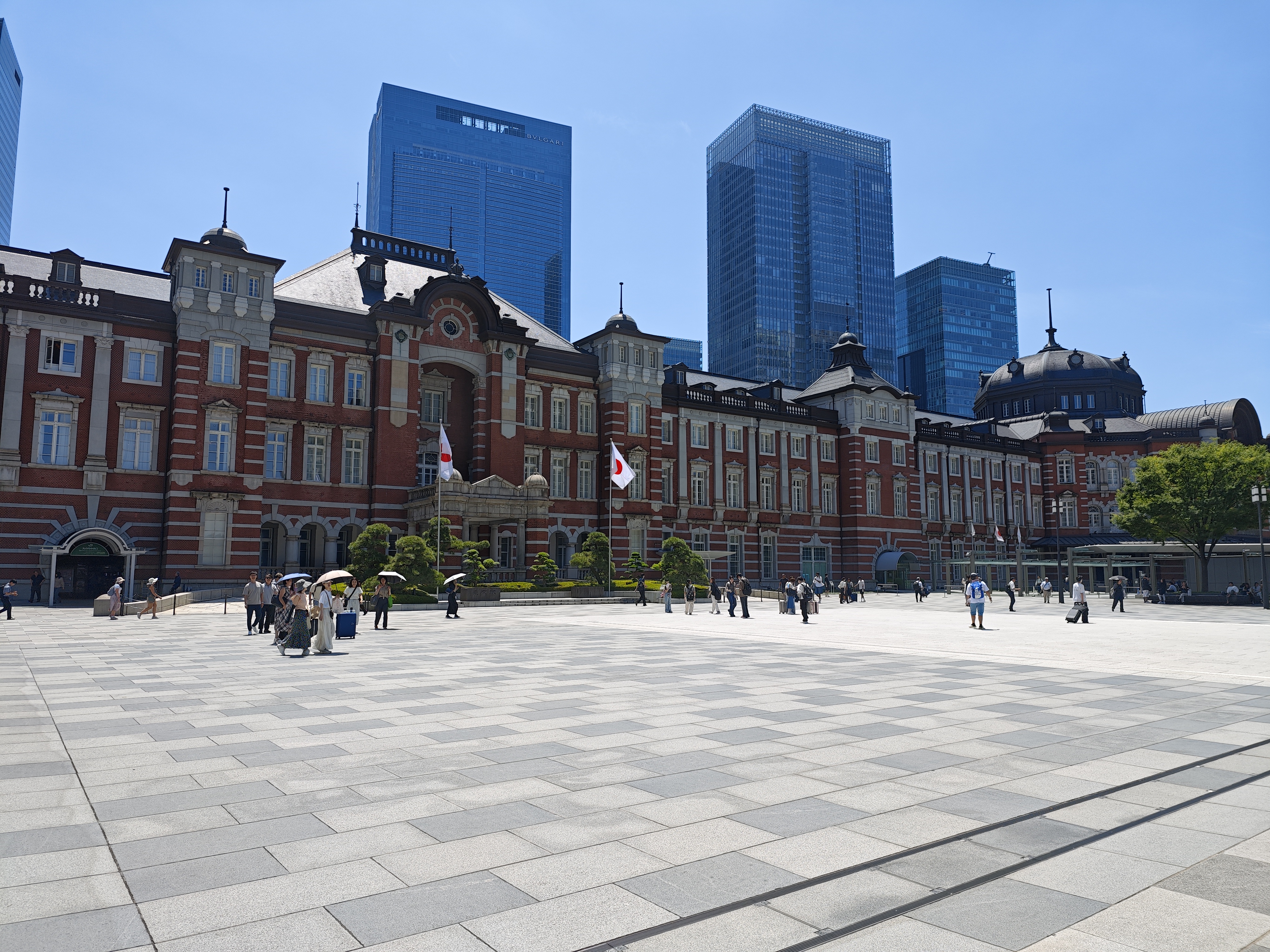
The two central areas deserve separate consideration too. In Marunouchi, start with Tokyo Station Gallery’s account of the station’s conservation and restoration to understand its red-brick exterior and restored third storey, then use the Nakadori street-shop directory to choose shops or somewhere to eat. For Ginza, use Matsuya Ginza’s floor guide to choose a shopping focus, or look at Wako’s window displays and how they present their objects. For graphic design, choose an exhibition at ginza graphic gallery, or ggg. The gallery closes on Sundays, public holidays and during changeovers, so there is not an exhibition to see every day; check the exhibition schedule and entry conditions before going. Marunouchi can be about observing the city without shopping; for Ginza, decide between department-store browsing, windows and a gallery, then leave time to eat. Each can have time of its own, rather than serving only as a photo stop on the way from east to west.
Choosing the west: define your area in Shinjuku and your purpose in Shibuya
“Shinjuku in the afternoon, Shibuya in the evening” sounds straightforward. But without a plan for what to do after arriving, two trips through stations may yield little more than two crossing photographs. Choose the main purpose of a visit to one area before deciding whether a second is needed.
First decide which part of Shinjuku interests you. Shinjuku Central Park, introduced by the local tourism association, sits among Nishi-Shinjuku’s high-rises, including the Tokyo Metropolitan Government buildings, and offers a starting point for observing the scale of the buildings and streets. For shopping, choose one or two specific destinations such as Isetan Shinjuku or MUJI Shinjuku Yasukuni-dori on the eastern side, allowing time for trying things on, paying and eating. When meeting someone, use an actual shop address or a confirmed public meeting point, rather than simply sending “Shinjuku Station”. If one last place you want to see is across the station, consider the time to navigate and get there before adding it.
In Shibuya, choose a focus from the music floors at TOWER RECORDS Shibuya, Taiseido Bookstore’s book categories or the fashion floors at Shibuya PARCO. One record shop or bookshop followed by a meal, or a comparison of two types of clothing shop, leaves more room in the day than trying to visit every shopping centre. Check current schedules separately for events and exhibitions: having an event space does not mean there is something on every day. If Harajuku or Omotesando also appeals, count it as additional walking and browsing time. Neighbouring areas on a map do not have to be compressed into one afternoon.
When your group has very different interests, you can browse separately within the same area, provided you agree on a meeting place and time first. Some people shopping while others sit down is easier to arrange than requiring everyone to follow a long sequence of stores. Anyone who needs lifts or cannot walk for long should check actual entrances and places to rest before choosing how much ground to cover.
What to leave out with two, three or four days
These suggestions use full days available for exploring. They do not promise fixed travel times between any two sights. Put confirmed bookings and closure days into your plan first, then add neighbourhood walks that can move around them.
With two full days, keep one eastern focus and one western focus. On day one, choose Asakusa’s streets or an exhibition in Ueno as the main activity. After lunch, decide whether you have the energy for a short additional walk; do not assume you can complete two half-day itineraries. On day two, choose whichever of Shinjuku and Shibuya better matches your interests. If Tokyo Station’s architecture and shopping in Ginza are what you most want, substitute that plan for the western day instead of squeezing in a third main strand. The essential compromise with two days is accepting that some famous names can wait for another visit.
With three full days, give the central areas a place of their own. Alongside a day in the east and a day in the west, make Marunouchi or Ginza the main area for day three. If architecture interests you, keep your attention on streets and exteriors; if you have particular purchases in mind, use the day to work through that list. After two days of exploring streets, you could also choose a museum instead. This day adds a different kind of activity, rather than collecting every sight left over.
With four full days, separate the eastern areas or spend longer on an interest. For cultural visits, give Ueno’s exhibitions and Asakusa’s streets separate days, keep another for the west, and decide whether the last day belongs in the centre or somewhere you want to revisit. If shopping matters more than exhibitions, separate Shinjuku and Shibuya so you can compare items and try them on without constantly checking the time. Day four can also absorb rain, shop closures or tiredness. An extra day does not automatically call for a trip to a distant suburb.
Do not count arrival day as the first full day. After landing there is immigration, baggage collection, travel into the city and check-in. If only a short part of the afternoon remains, eat or take a brief walk near your accommodation. On departure day, confirm your terminal and airport journey before deciding whether there is room for shopping. Finding an available locker, retrieving luggage and getting your bearings inside a station all take time.
Match accommodation to your days, then check the whole airport-to-door journey
Mark each day’s main activity on the Tokyo city map before choosing possible areas to stay. If most plans are around Ueno and Asakusa, compare how eastern hotels connect with your daily starting points. If Shinjuku and Shibuya are your priorities, start in the west; for Marunouchi and Ginza, begin with the Tokyo Station area and central neighbourhoods. This is a way to reduce repeated journeys across the city, not a claim that any area is always cheaper, quieter or right for everyone.
Next, check the hotel address against the nearest exit you can actually use. A short straight-line distance from a station does not mean a short journey from your platform. If you need a lift, a walking estimate from a stair-only exit is not a substitute. Compare luggage storage, check-in time and the final approach alongside room prices. Changing hotels also means packing, checking out and checking in again. On a short stay, saving a few stops each day may not justify repeatedly moving your luggage.
Break airport travel into four parts: terminal to station, the rail or road journey, any transfer in the city, and the walk to the hotel. JR East’s Narita Express information lists service points including Tokyo, Shinagawa, Shibuya and Shinjuku, but you need to check your chosen service and the operating notices for your day. The operator also issues notices about services running over shortened routes because of engineering work. A hotel described as near Shinjuku does not mean every train on every date gets you there without changing. Check whether a transfer is needed before comparing tickets and luggage arrangements.
Haneda Airport’s official transport page lists the Keikyu Line and Tokyo Monorail, directing timetable and fare enquiries to the operators. Start with your terminal, arrival time and accommodation location, rather than choosing the shortest-looking station-to-station journey. For a late arrival or early flight, check last or first services and the time needed for airport check-in. If the connection does not work, reconsider transport or accommodation instead of relying on an old screenshot.
Put opening days, meals and spending on the same plan
For a museum day, choose the exhibition first, then check opening days and admission conditions. The Tokyo National Museum visitor page, for example, distinguishes whole-museum closures from individual gallery closures, and notes security checks, suitcase restrictions and possible ticket queues at busy times. A closed gallery does not mean the whole museum is unavailable. But if that gallery is the reason for your visit, changing days may be worthwhile. Buying a ticket online does not remove the need to allow time for security.
Choosing just one meal each day as a particular destination, and keeping the others within your main area, usually leaves more time to explore. Shopping and museum days can also call for different lunch plans. When comparing lots of products, choose a nearby meal where you can sit down; when taking your time with an exhibition, check the museum’s dining and exit rules first. Do not fill both morning and afternoon before discovering there is no time between them to find somewhere to eat or wait for a table.
Divide your budget in yen into accommodation, airport transport, city transport, meals, admission and shopping. For example, if you set yourself a daily meal limit of ¥4,000 and allow another ¥1,000 for drinking water and small incidental purchases, those two amounts total ¥5,000. This is an example of setting personal spending limits, not Tokyo’s total daily cost or an indication of restaurant prices. Accommodation, both kinds of transport, admission and shopping still need to be added separately. Transport passes and booked tickets have their own conditions: “Tokyo” in the name does not mean every journey and entry is included.
When weather or energy changes, reduce the area before switching neighbourhoods
If it rains, first ask whether the day’s main purpose still works. For a museum day, keep the confirmed exhibition and meal, and shorten the park or riverside walk. For shopping, reduce travel between neighbourhoods and choose a few stores you really want to browse. Being able to enter a shopping centre does not mean there is a continuous covered route to it, or that buying a last-minute ticket should be your only way to get out of the rain.
If you are already tired in the morning, remove the second area from the afternoon rather than trying to rescue the plan with more tightly timed transfers. Dinner near your accommodation may do more for the next day’s enjoyment than chasing another night view. For a day with less walking, check entrances, movement between floors and seating within your main area too. “In the same neighbourhood” is not an accessibility guarantee.
Before setting out each day, check three essentials again: whether your main destination is opening as expected, whether your booking still applies, and how you will get back to your accommodation. Use this overview to make room for what you most want to do. Once you have chosen the main area, pick a neighbourhood or venue itinerary that fits it, so your Tokyo days have time for the experiences that brought you there.