Four Hours in Tsim Sha Tsui: Landscape Paintings at the Museum, Then the Harbour Itself
The most rewarding way to visit the Hong Kong Museum of Art is not necessarily to walk through every gallery. This half-day begins with the ways artists arrange a landscape, then considers how crafted objects change for different audiences, before taking those questions outside to Victoria Harbour. The indoor and outdoor sections give each other meaning: the waterfront becomes more than somewhere to take a quick photograph after lunch.
Start outside Tsim Sha Tsui Station and finish outside East Tsim Sha Tsui Station. The four hours include selected exhibitions, movement between galleries, lunch and rest. There is no Space Museum visit or Star Ferry ride, and the aim is not to “finish” the art museum. This route suits visitors who enjoy spending a few extra minutes with a small number of works while leaving room for time outdoors.
Choose two galleries before you arrive
The Hong Kong Museum of Art generally opens from 10:00 to 18:00 on Mondays to Wednesdays and Fridays, and from 10:00 to 21:00 on Saturdays, Sundays and public holidays. It closes on Thursdays except public holidays, and on the first two days of the Lunar New Year. General admission is free, with separate arrangements for special exhibitions; see the museum’s opening hours and admission information. Plan the 10:00 start below for a day when the museum is open. The availability of a waterfront walk does not make the museum’s closing days irrelevant.
If the exhibition listing still includes the Wu Guanzhong landscape exhibition, Phase II (吳冠中──邂逅風景(第二期), roughly “Encountering Landscapes”), and the Canton and export art exhibition featuring donations from the Muwen Tang Collection (粵藝遠洋──沐文堂廣東及外銷藝術捐贈展), these two free exhibitions make a useful pairing. Begin on the fourth floor to see how a landscape becomes a picture, then move to the third floor to consider how objects travel between places and uses. Displays rotate: check the exhibition names, floors and opening arrangements before visiting. If one gallery is changing its display, choose a similar exhibition confirmed to be open, or spend longer in just one gallery.
Choosing exhibitions is not a competition to see the most. Reduce “what do I want to understand today?” to one question. Why does a painter leave out some of the windows? Is an elaborately decorated object meant first to be used, or to be looked at? Studying two or three works with a question in mind often leaves a stronger impression than reading every label.
The full 10:00–14:00 plan
These timings are editorial estimates for an ordinary walking pace, no long queues and only the selected galleries. Adjust how long you spend with individual works, but keep time for moving around the building, lunch and the return to the station.
| Time | Activity | Time allowance |
|---|---|---|
| 10:00–10:15 | Walk from outside Tsim Sha Tsui Station to the museum | Walking: 15 minutes |
| 10:15–10:25 | Enter and confirm the galleries | Waiting: 10 minutes |
| 10:25–11:20 | Selected works in the Wu Guanzhong exhibition | Viewing: 50 minutes; movement inside the building: 5 minutes |
| 11:20–11:30 | Rest and move to the next gallery | Rest: 5 minutes; movement: 5 minutes |
| 11:30–12:10 | Selected examples of export craftsmanship | Viewing: 40 minutes |
| 12:10–12:20 | Leave the museum and walk to nearby food options | Movement: 10 minutes |
| 12:20–13:00 | Lunch | Waiting: 5 minutes; eating: 35 minutes |
| 13:00–13:10 | Return to the waterfront | Walking: 10 minutes |
| 13:10–13:40 | Observe the harbour and rest | Viewing: 20 minutes; rest: 10 minutes |
| 13:40–14:00 | Walk to outside East Tsim Sha Tsui Station | Walking: 20 minutes |
That adds up to 110 minutes of viewing, 65 of movement, 15 of waiting, 35 for lunch and 15 of rest: 240 minutes altogether. Choose a simple nearby lunch without a long queue. The plan does not specify a museum restaurant or guarantee an available table.
First gallery: break a landscape into lines, colour and empty space
The museum’s Wu Guanzhong exhibition introduction includes sketches, ink paintings and oils, with a focus on the places he observed overseas after leaving Jiangnan. This mix lends itself to comparing media first and composition second, rather than simply identifying the location in each picture.
If the work listed as 1990年香港(一)—“Hong Kong in 1990 (I)” in a descriptive translation—is on display, look before reading the label. Which line draws your eye into the picture? Find one densely worked area and one more open area, and consider how each makes your gaze pause. Then choose an oil painting, such as 網(都市), approximately “Net (City),” listed on the exhibition page, and compare how lines and blocks of colour create a sense of a city. These works may not be displayed together or close to each other. If you cannot find them, choose one ink painting and one oil painting that are there, instead of rushing between floors to locate specific titles.
Read the labels on your second pass, checking the medium, year and title. Has your first impression changed? Finally, return to your favourite work and write one observation of your own: “The empty space gives the picture more room to breathe than the buildings do,” for example. This is an exercise in looking, with no correct answer to guess. Nor do you need a phone full of photographs of every painting; follow each gallery’s photography rules.
Second gallery: why put a similar pattern on a different material?
The Canton and export art exhibition focuses on art from Guangdong and work made for export. The museum’s highlights include lacquerware, metalwork, painted enamels and textiles and embroidery. Rather than trying to cover every category in 40 minutes, choose two objects made from very different materials.
For example, if the screen listed as 黑漆描金人物故事圖屏風—a black lacquer screen with gilt narrative scenes, described here rather than given an official English title—is displayed, begin with its large-scale arrangement and the stories told through its figures. Then find a smaller metal object and see how its decoration changes direction around a curved surface. Imagine the objects in a room: how close would someone need to stand to notice the details? Size, material and viewing distance give you more to say than simply calling something “exquisite.”
When reading labels, distinguish where an object was made, what it was used for and where the collection came from. An exhibition about export art does not mean you can tell every object’s intended buyer from its appearance alone. Look to the accompanying text for evidence. The display of historical materials is not advice on what to buy today; keep the focus on craftsmanship and cultural exchange.
After lunch, take the paintings’ lessons back to the harbour
Give your eyes a rest while eating, rather than scrolling through exhibition notes and rushing towards the next stop. Thirty-five minutes to eat and five to wait suits a simple lunch. If your preferred restaurant has a queue, shorten the waterfront viewing by 10 to 15 minutes instead of cutting the walk back to the station.
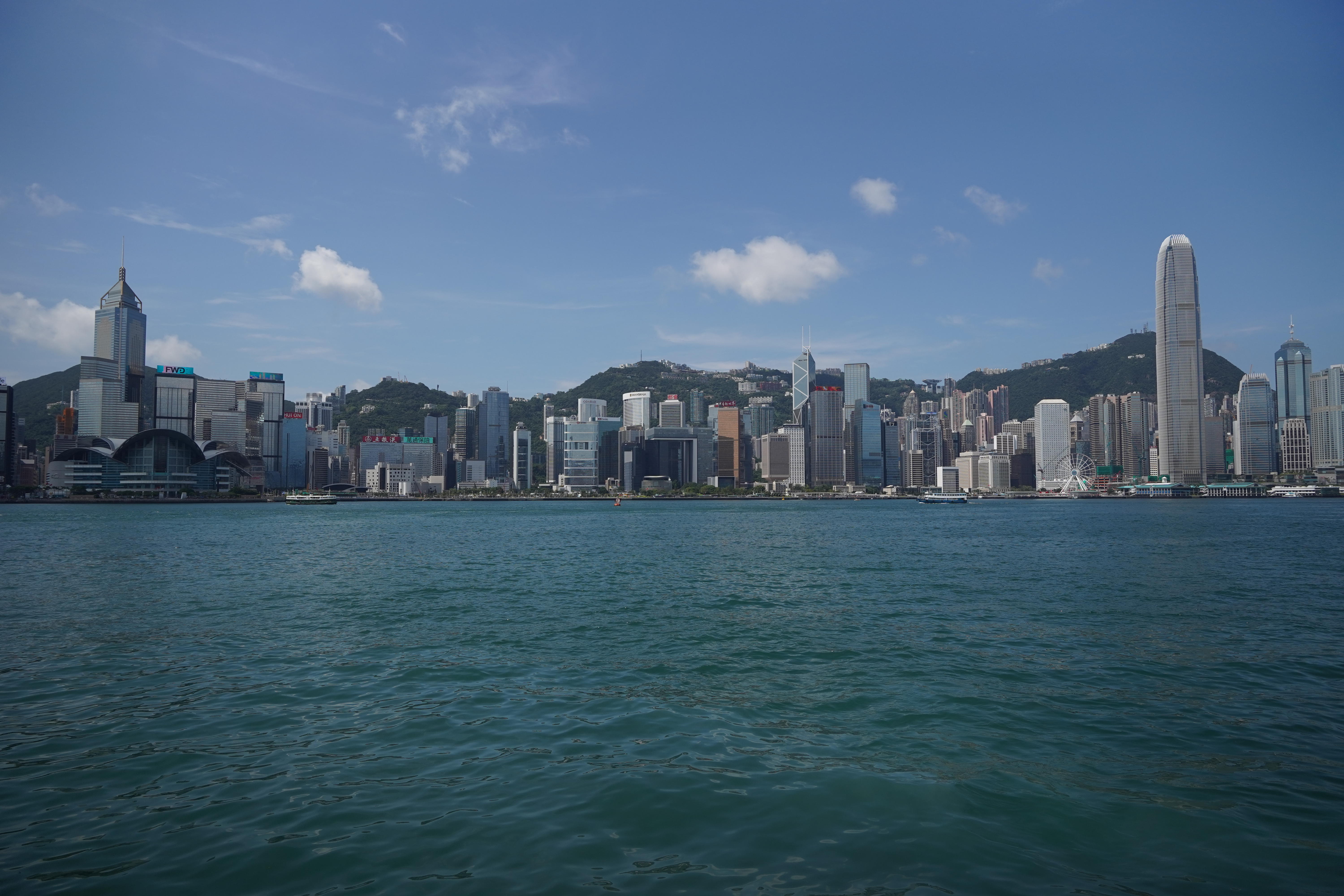
At the water’s edge, try framing a view using the same approach you used with the paintings. A nearby railing becomes a line, the water a broad open area, and the buildings across the harbour a dense group of colour blocks. Explore the view with your eyes before taking one photograph. Ask what you could leave out to make the composition clearer. You do not need to imitate an artist’s style; the point is to carry the attention you gave the artworks into the real city.
This section does not involve searching out every star’s handprint. If Hong Kong cinema is your main interest, choose the separate Clock Tower and cinema waterfront short walk and let this half-day retain its focus on looking at art.
Costs, rain and what to cut first
If you visit only the free galleries described above, admission costs nothing. Allow HKD 80–130 for lunch and HKD 20–40 for drinking water or simple refreshments: HKD 100–170 in total, plus your actual return MTR fares. These food and drink amounts are editorial budgeting examples, not prices quoted by particular businesses. Paid special exhibitions, souvenirs, guided tours and restaurant set menus are extra. Free general admission does not mean every museum activity is free.
If you have not started the first gallery by 10:40, keep just one main gallery and replace the second with a short rest. In rain, drop the 30-minute waterfront section and rest in an area where this is permitted inside the museum or in a nearby indoor space; do not squeeze in another museum instead. If heavy rain disrupts travel, head back to the station early. When the museum is closed, an outdoor short walk is a different, shorter plan, not completion of this museum half-day. Before leaving, use the Hong Kong MTR map to choose your routes to the start and from the finish.