Your first visit to Jakarta: choosing between the old town, central areas and the south
When planning a first visit to Jakarta, decide where to spend each half-day before deciding what to see. The squares and historic buildings of the old town, the commemorative spaces around Monas and outdoor reading in Blok M offer quite different experiences. Putting all three into one morning leaves too little time for any of them. This guide groups choices into the old town, central areas and the south to help you plan around the days available; these are itinerary groupings, not precise administrative boundaries.
With only half a day, choose one theme. With a full day, make one area your main focus and add a second stop only if transport and your energy allow. Two full days give you more room to separate the old town from central and southern options. All time allowances below are editorial suggestions for activities. They exclude hotel transfers, airport journeys and any guaranteed journey time between areas.
1. Choose an area to match your interests
Do not judge a plan by the number of sights on the map. Would you rather explore city history, understand a national symbol or find a slower moment of everyday life? Answering that question often removes half the unnecessary travel.
| Itinerary grouping | Possible stop | What it offers | Time to allow and what to leave out |
|---|---|---|---|
| Old town | Kota Tua and Fatahillah Square | Read the historic district through its square and former civic buildings | One half-day; reduce other street stops if you enter a museum |
| An alternative old-town outing | Glodok and the Pancoran street area | Focus on commercial streets and the surroundings of the market | About two hours of activity; do not assume you can also cover the whole old town on the way |
| Central areas | Around Monas | Explore a symbol of Indonesian independence and its commemorative setting | One half-day; check access to the grounds, monument interior and viewing level separately |
| Central areas | Suropati Park in Menteng | Walk slowly and rest in a tree-lined park | About one to two hours; do not make a performance or event essential to the visit |
| South | Blok M and Martha Christina Tiahahu literacy park | Bring your own book and make time to read outdoors | About two hours; do not make a library visit or indoor services essential |
These allowances are starting points for leaving yourself breathing room, not official recommended visit durations. If you want to combine two rows in one half-day, check the actual transport options for that day and shorten one activity. Adding the activity times together does not produce a complete itinerary with travel included.
2. The old town: choose between the square and commercial streets
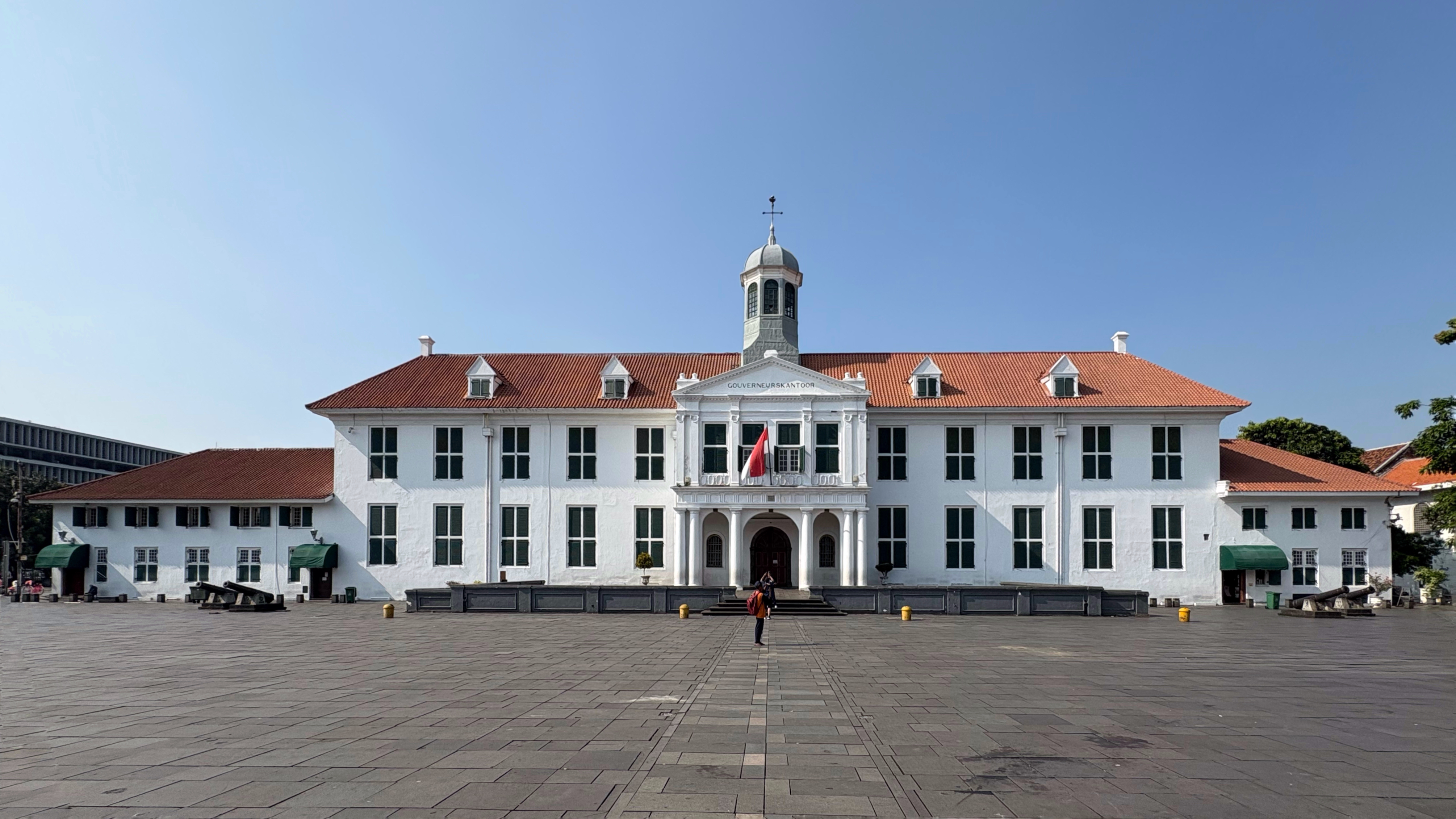
Kota Tua retains historic buildings and traces of old Batavia’s urban layout. Fatahillah Square, in front of the former city hall, makes a useful starting point for a first visit: look at how the buildings frame the square, then decide whether to turn your attention indoors. The former city hall now houses the Jakarta History Museum. If you want more city history, consider it after checking that it is open for your visit. The old town also offers museum themes centred on puppetry and fine arts and ceramics. Being nearby is no reason to enter every museum in one day.
For a half-day outing, allow about an hour for the square and surrounding buildings, then choose one extension: enter a museum confirmed open that day, or continue exploring the streets. Keep lunch, finding a toilet and sitting down for a break within that half-day too. If a museum queue uses up the time set aside for your extension, drop the later street stop. Do not turn lunch into another rushed task just to preserve the list. Check each museum’s notices for applicable tickets, closing days and temporary gallery arrangements.
Glodok offers a different way of looking. The West Jakarta government identifies Pasar Glodok on Pancoran street as a commercial area. If shopfronts, shopping activity and everyday street scenes interest you more, make this area your theme. It is not another name for Fatahillah Square, and grouping both into an “old town” outing does not remove the travel time between them.
With only half a day, choose either the square plus one historical theme or Glodok’s commercial streets. If you have a full day for this group of areas, visit one in the morning, then decide after lunch and a rest whether to add the other. If shops have not opened or a street is unsuitable for a longer stop, there is no need to keep doubling back in search of a particular online favourite. For visitor assistance in the old town, see the official Jakarta Tourist Information Center information, and check service hours separately before going.
3. Central areas: different reasons to stop at Monas and Menteng
Monas stands in Lapangan Merdeka in Gambir, Central Jakarta, and symbolises Indonesia’s struggle for independence. If you want a landmark with a clear connection to national history on your first visit, it can anchor your central-area plan. First distinguish between seeing the surrounding commemorative space, entering the monument and going up to a viewing level. The latter two require separate checks of opening, tickets and queues for your visit. A photograph of the landmark is not evidence that every part is accessible.
When allowing half a day for Monas, leave time on arrival to find the appropriate entrance and check the rules, then do the activities you have confirmed are possible. If temporary restrictions prevent your main purpose, shorten the visit instead of repeatedly circling the perimeter in search of another entrance. Strong sun or rain may also be a reason to finish the outdoor portion early and use the remaining time for food and rest. You do not need to complete a circuit to make the visit count.
If you simply want a quiet pause in the city, Suropati Park in Menteng is another option. The official park introduction describes its rows of trees and historical setting. Begin by noticing the shade, paths and how people use the space. About one to two hours of gentle walking, sitting and resting can form a worthwhile outing without waiting for weekend music or a community event. Activities mentioned on an introduction page are not necessarily a fixed daily programme.
Although this guide places Monas and Suropati in the same central grouping, they are separate destinations. Allow additional time for travel and meals if you want to visit both in one day. If you would prefer the National Museum to an outdoor activity, first confirm which galleries are actually open, the applicable tickets and any booking conditions, then rearrange the half-day. A collection description does not mean every object or gallery is accessible. Do not list the objects you hope to see and assume they will all be on view that day.
4. The south: outdoor reading in Blok M without relying on indoor services
Martha Christina Tiahahu literacy park in Blok M offers a slower introduction to Jakarta. Bring your own book, find a suitable place and allow yourself to stop for a while. The Jakarta government’s park announcement includes this park in the south, but information about outdoor park access does not guarantee that a library, shops or every indoor space will be operating.
You might allow about half an hour to get your bearings and find an available seat, then about an hour for reading, with the remaining time for packing up, resting and leaving. This is a suggested two-hour activity allocation; travel to Blok M and back to your hotel is additional. If there is no suitable seat, it rains or the heat becomes uncomfortable, shorten the reading session. Sitting for a full hour should not become an obligation.
This outing does not depend on an unplanned library visit, being able to borrow a book or entering Blok M Hub. If you want an indoor activity, check its admission conditions first and use it to replace part of the time already allocated. Plan a meal before or afterwards according to what is open and your budget, rather than committing the whole outing to an unconfirmed restaurant.
If historic buildings are your priority, leave Blok M for the second day or omit it from this trip. If you have already seen the landmarks and have only two hours free, outdoor reading can be a complete theme in its own right.
5. Half a day, one day or two: work with whole blocks of time
Half a day: choose one theme. For a historic district, choose Fatahillah Square and one extension. For a national symbol, focus on Monas. To slow down, choose either Suropati or Blok M. If you also have a flight or a long-distance journey that day, subtract travel and check-in time before deciding what is left. Being in Jakarta during the morning does not automatically give you half a day to explore.
One full day: one main area and an optional extra. A manageable approach is to focus on Fatahillah in the morning, then decide after lunch whether your energy and the transport conditions allow Glodok. If you have already visited a museum, accept that the afternoon might consist only of a meal, rest or returning to your accommodation. If central areas appeal more, put Monas in the morning and keep Suropati as an optional afternoon stop. Both combinations need separate transport checks; neither is presented as a seamless walking route.
Two full days: the old town first, then central or southern choices. Give the first day to the old-town theme that most interests you. On the second morning, you could choose Monas, leave time for a meal and rest, then decide between Suropati and Blok M according to transport and weather. You do not need both. If reading is your priority, make Blok M the main focus of day two and keep other sights as alternatives. If you add a museum confirmed open on the second day, replace an existing block instead of squeezing a third rushed stop between two areas.
The value of another day is the room it creates for meals, rest and changes of plan. These options are templates for making choices, not field-tested transport schedules. Do not use them to calculate a guaranteed arrival time at your next stop.
6. Before you go, check what will actually change your plan
Work backwards from your main activity areas when choosing accommodation. If both days focus on the old town, compare the actual return journeys there. If your interests centre on the central areas or Blok M, compare journeys between those destinations and your accommodation. A hotel’s straight-line distance from a station is not enough. Consider the complete journey, including entering and leaving stations, transfers, walking outside and waiting for a ride. This guide does not supply unverified fixed journey times, exit numbers or last-train times.
If you plan to use the MRT, check operating and ticket information on the official MRT Jakarta website before travelling, then use journey information for your travel day to choose a route. The link is not a guarantee of any particular service, fare or route through a station. Once you reach an area, do the main activity first. If travel takes longer than expected, drop the second stop rather than cutting the buffer you need before a booked activity.
Budget separately for local transport, food, paid venues you choose to enter and changes of plan. A seemingly precise daily total is not very helpful before you know which museums and transport you will use. When checking prices, confirm the ticket category that applies to you, any additional special-exhibition fee and accepted payment methods. List airport journeys, accommodation and intercity travel separately so they are not mistaken for costs included in one day around the city.
Finally, keep one item in each half-day that you can drop, and decide which outdoor portion to shorten in rain or excessive heat. An outdoor park cannot automatically be replaced with an indoor facility whose access you have not checked. You can eat earlier, return to your accommodation for a rest or go somewhere with confirmed entry conditions. On a first visit to Jakarta, having a clear reason to spend time in each area is more likely to leave a lasting impression than crossing off the largest number of places in one day.