Planning Your First Seoul Trip: Palaces, Neighbourhoods and the Han River
Start with what you want to spend time doing, rather than joining every saved café and landmark into one long route. If palace architecture interests you, give the courtyards and surrounding streets your attention. If you enjoy browsing independent shops, allow for the browsing—and the queues—to take much of an afternoon. A day in Seoul does not need to include a palace, a museum, a shopping centre and a river view.
This guide is for a first or second independent visit focused on the city. It helps you choose areas and divide your days; it is not a route through every attraction. Trips beyond Seoul, such as Suwon, are not folded into these city days. If anyone in your group has difficulty with walking or stairs, choose accessible venues and entrances before settling on accommodation and the size of each day's outing.
Six areas, six reasons to spend time there
| Area | What to focus on | What to allow for |
|---|---|---|
| Gwanghwamun, Gyeongbokgung and Jongno | Palace gates, courtyards and the relationship between historic streets | Entering the palace and walking outside it are different plans; check palace closure days |
| Ichon, Yongsan and Itaewon | Major museum collections, different cuisines and neighbourhood life | Leaving a gallery does not put you at your restaurant; allow for travel and walking at both ends |
| Hongdae, Sinchon and the Ewha area | Independent shops, art supplies, youth culture and university neighbourhoods | Campuses have their own access rules, while each shop sets its hours |
| Seongsu and Seoul Forest | Converted industrial spaces, or a separate outing to observe plants | Cafés, pop-ups and the park can each be the main activity; you need not combine all three |
| Samseong and COEX in Gangnam | Shopping-centre public spaces, exhibitions and a modern city district | Gangnam covers a large area; its different destinations are not all beside one station |
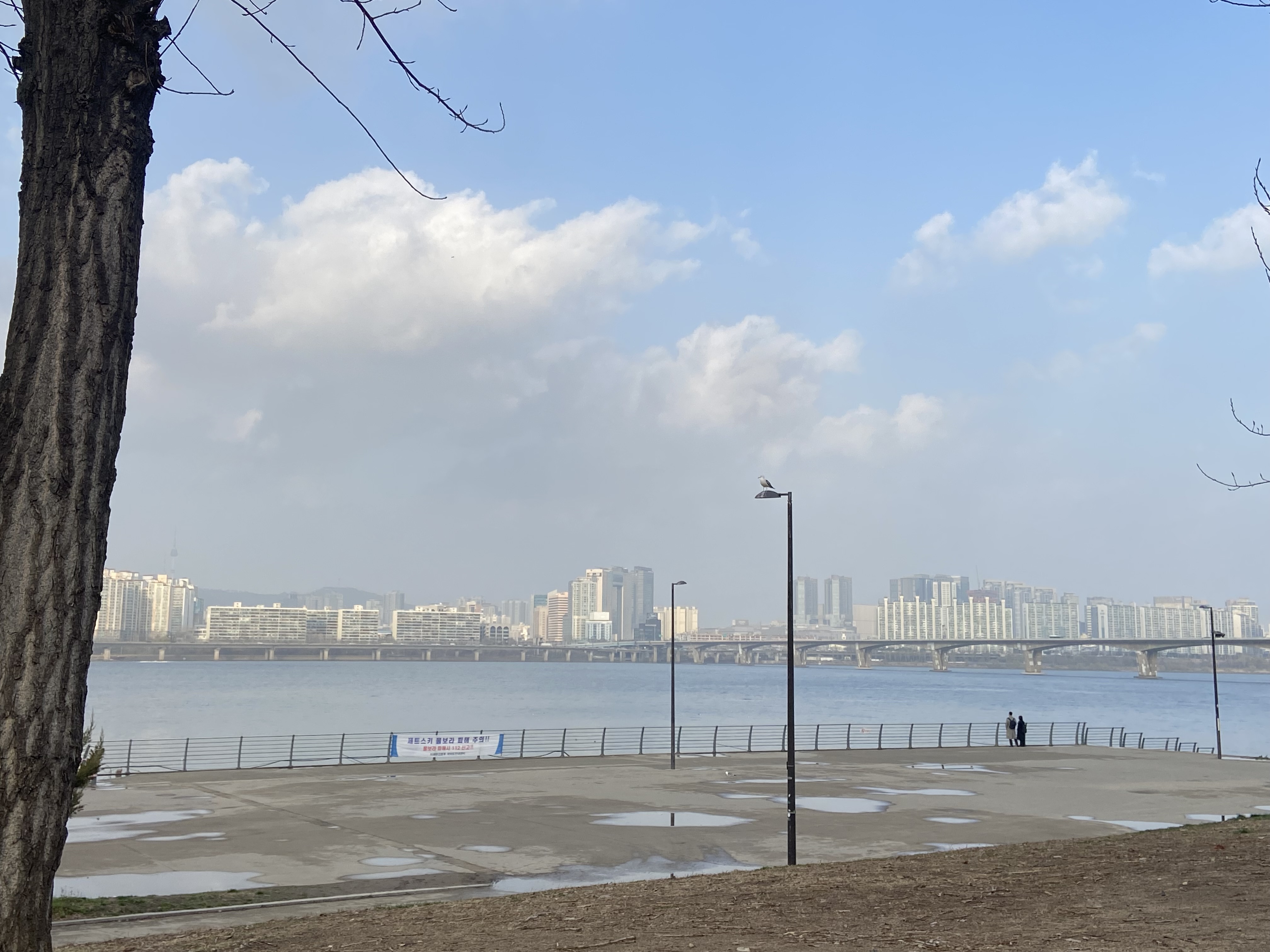
| Han River parks | A stretch of riverside for sitting, walking or looking across the city | Choose a particular park and a station for the journey back instead of following the river indefinitely |
The palace's own introduction is a starting point for Gyeongbokgung's history. On a first visit, though, you do not have to memorise every hall. Following one question—how does the view change as you pass through each gate?—can give a palace half-day a clear focus. Jongno has other cultural spaces nearby; choose one kind that interests you rather than treating every nearby name as another essential stop.
For a museum day in Yongsan, decide which galleries you want to see. The National Museum of Korea generally offers free admission to its permanent exhibitions, while some special exhibitions charge separately. Studying one group of objects takes a different kind of attention from trying to cover the whole museum. If your companions prefer a short visit, plan something else after lunch instead of expecting everyone to spend all day at display cases. A meal in Itaewon can happen on another day: being in the same district does not make the two compulsory partners.
Hongdae offers more than a shopping checklist. Homi Art Shop, described by Seoul's tourism office, gives visitors interested in art materials a specific way into the area's culture. If art supplies are not your thing, there is no need to make a special trip. Choose two interests, such as independent design and records, then look for the corresponding kinds of shops. Without a particular shopping goal, keep to one commercial area and leave time to notice the streets and sit down for a meal.
In Seongsu, look at what former industrial spaces are used for now. The official neighbourhood introduction explains the conversion of factories and warehouses into shops and cultural spaces. Original doors, windows and column spacing can be as interesting as the latest display. Seoul Forest is a different option. If plants are your priority, give the park two hours of its own; a nearby shopping area does not have to become part of the same outing.
The official COEX tourism introduction describes a complex linking exhibitions, conventions and shopping. Public spaces, individual exhibitions and separately ticketed attractions have different entry conditions. Decide whether you want an exhibition or a visit to the public spaces before choosing an entrance. Putting “COEX” on an itinerary does not mean every venue inside has been planned.
Making choices for two, three or four days
These are ways to divide your days, not promises of a continuous route timed to the minute. Once each day's main interest is clear, check the journey from your accommodation to the starting point and the trip back after dinner.
With two full days, give one to Gyeongbokgung and the Jongno area. For the other, choose among a museum, browsing in Hongdae, or Seongsu or Seoul Forest. Spending real time in a palace and a neighbourhood is likely to leave a stronger impression than crossing every popular district in two days.
With three full days, add a contrasting activity. If the first two days are mostly streets, make the third an exhibition day. If they are full of architecture and collections, choose a park or shopping. Make the COEX area your day's main district if Gangnam has something you specifically want to see; crossing the river solely to tick off the name need not be a priority.
With four full days, keep one for going deeper or changing plans. An interest in ceramics or other objects might lead to a closer comparison of a theme in a collection. A design enthusiast might return to a favourite shop or book an activity. This day can also absorb poor weather, a closure or unexpected tiredness. It does not need another fixed list of sights from the outset.
Treat arrival and departure days separately. Landing is followed by immigration, baggage collection, finding transport and checking in. Departure requires a margin for the return journey. Neither day should automatically count as a full city day starting in the morning.
Choose accommodation after checking the whole journey
Seoul's official airport transport guide covers airport rail, buses and taxis. Compare the journey from the terminal to your accommodation's door, rather than train running time alone. Express and all-stop trains serve different stops; if your accommodation is not beside the terminal station, transfers and the final walk matter too. Check actual fares, timetables and last services with the operator rather than planning your return around an old screenshot.
Ask three questions before choosing a base: where will most of your days be spent, how late will you return, and how much luggage will you have? Gwanghwamun or Jongno may be worth considering for palace-focused days. Staying around Hongdae may suit frequent visits there. If Samseong is central to your plans, compare accommodation in Gangnam. These are starting points for a search, not substitutes for checking a hotel's exact position, sound insulation, lifts and approach on foot.
Before booking, enlarge the route between the hotel and a usable station exit. A short straight-line distance may conceal a major road, stairs or an exit at the other end of the station. If you need a lift, calculate the walk from the exit you can actually use. Before planning a day across several districts, add up travel and waiting time and decide whether the final stop still earns its place.
Food and spending: budget for your choices
Not every meal needs to be at a famous restaurant. Pick the one meal each day that matters most to you and arrange the others near your main area. Check portion sizes, minimum orders and likely waiting. After a palace or museum visit, eating near the station for your return may be more comfortable than another journey to a popular restaurant.
Write your budget in won and keep the parts separate: divide the nightly accommodation cost among the people sharing it, then add your food allowance, actual transport fares, admission and shopping. For example, a self-imposed food allowance of KRW 40,000 plus KRW 10,000 for drinking water and small purchases totals KRW 50,000. Accommodation, transport, entry fees and shopping still sit outside that sum. This is a calculation example, not a daily cost estimate for Seoul or a statement of restaurant prices.
List paid special exhibitions, theme parks and observation decks first so you can see which days may cost more. Even days centred on free public spaces still involve food and travel. This gives you a more useful budget than a single answer to “How much does Seoul cost per day?”
Check which days can actually be swapped
Palace closure days and museum gallery closures do not follow one shared rule. A park being open all day does not mean its botanical facilities are. Check each day's main destination before deciding that two days are interchangeable. In cold, heat or rain, shorten outdoor stretches and plan breaks where you can sit down; changing weather does not require adding more stops.
For a more focused starting point, read the Gyeongbokgung and Gwanghwamun half-day, the Seoul Forest guide or the COEX and Bongeunsa half-day. Choose one that matches your interests, then adjust for opening conditions and your energy on the day. There is no need to fit all three into one outing.