Gyeongbokgung and the National Museum of Korea: a day for looking closely
For a history-focused day in Seoul, I would pair Gyeongbokgung with the National Museum of Korea and give each a different job. At the palace, look at how buildings shape a space. At the museum, bring your attention down to the shape of an object. The pleasure is in that change of scale, with enough room in the day to notice it.
Choose your priorities before choosing a day
Gyeongbokgung and the National Museum of Korea are separate destinations. There is also a National Palace Museum near Gyeongbokgung; the similar names are easy to confuse. Save the full names before making plans so that visitor information for one museum does not become your plan for the other.
Gyeongbokgung normally closes on Tuesdays. When Tuesday is a public holiday, closure moves to the following business day. Check Korea Tourism Organization's visitor information before choosing your day. Special visits, programmes and access to individual buildings need their own checks.
At the palace, follow the spaces between buildings
You do not need to learn every building's name before enjoying the grounds. Try following a visual question instead: what changes when you pass through a gate? Does the view open out, or does another building draw your eye forward? Geunjeongjeon Hall and Gyeonghoeru Pavilion are among the features highlighted by KTO, offering different ways to look at a hall and a pavilion in their surroundings.
Stay within the areas open to visitors and let the day's notices guide you. Going inside every building need not be the point. If your companions prefer photography, choose a few views rather than turning the visit into a race for every angle. In uncomfortable weather, shortening the outdoor portion can leave more energy for the museum.
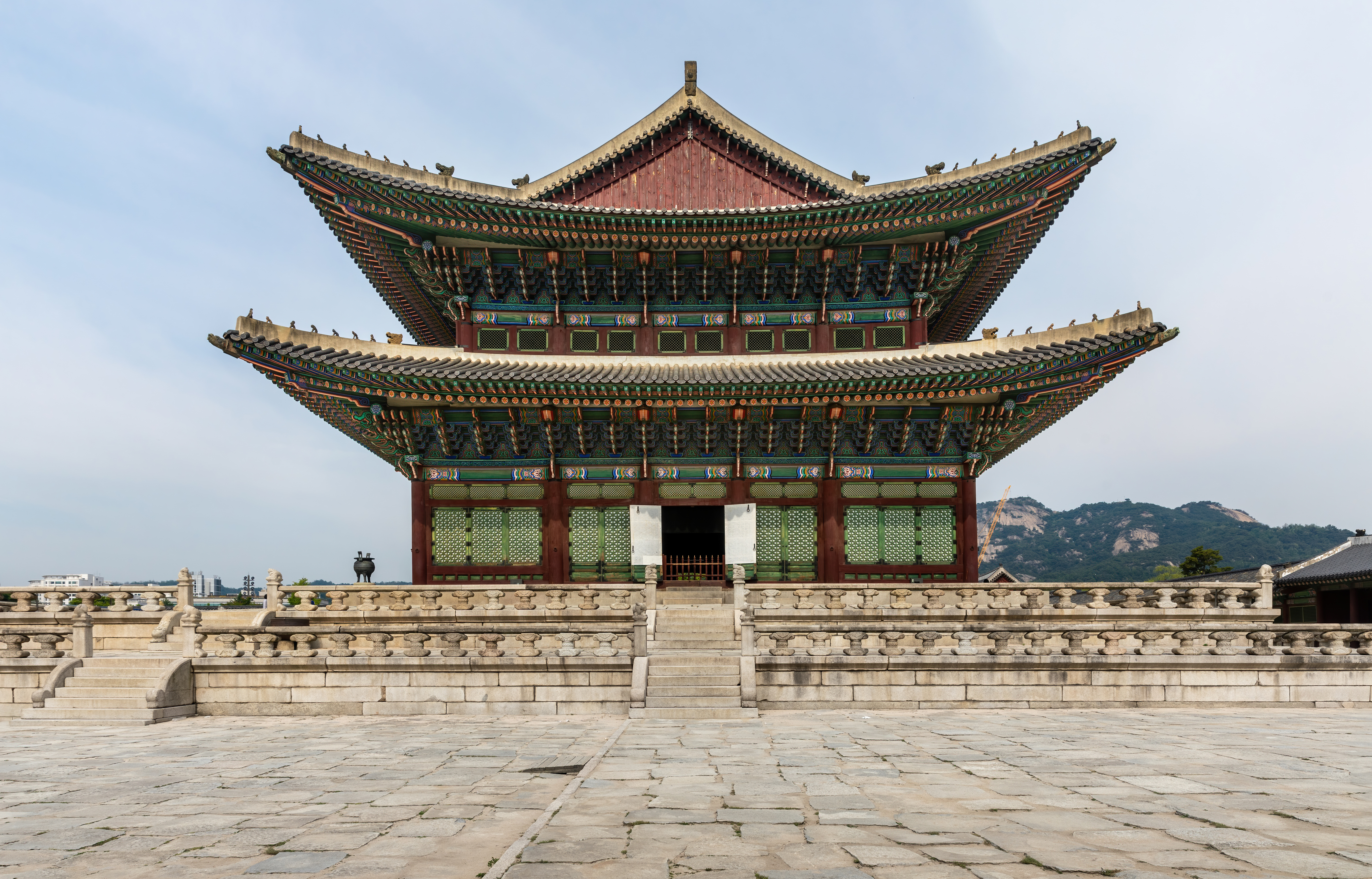
Photo: Basile Morin / original / CC BY-SA 4.0. Original image displayed proportionally; no cropping, retouching or recompression. The photograph retains its licence.
Plan around the galleries that are available
The museum's Buddhist Sculpture Gallery, Metal Crafts Gallery and Room of Sense are temporarily closed. The Celadon Gallery and the Buncheong Ware and White Porcelain Gallery remain open. This is a partial gallery closure, not a closure of the whole museum. Check the museum's gallery notice before setting out; reopening arrangements may change.
If Buddhist sculpture or metalwork is your main reason for coming, check that exact gallery before deciding to keep this stop. A collection description is not a guarantee that its objects are on display. If ceramics appeal, make shape your theme instead: how do a spout, handle and lid fit around the body of a vessel? Looking first, then reading the label, can make the visit easier to enter than trying to remember a sequence of dates.
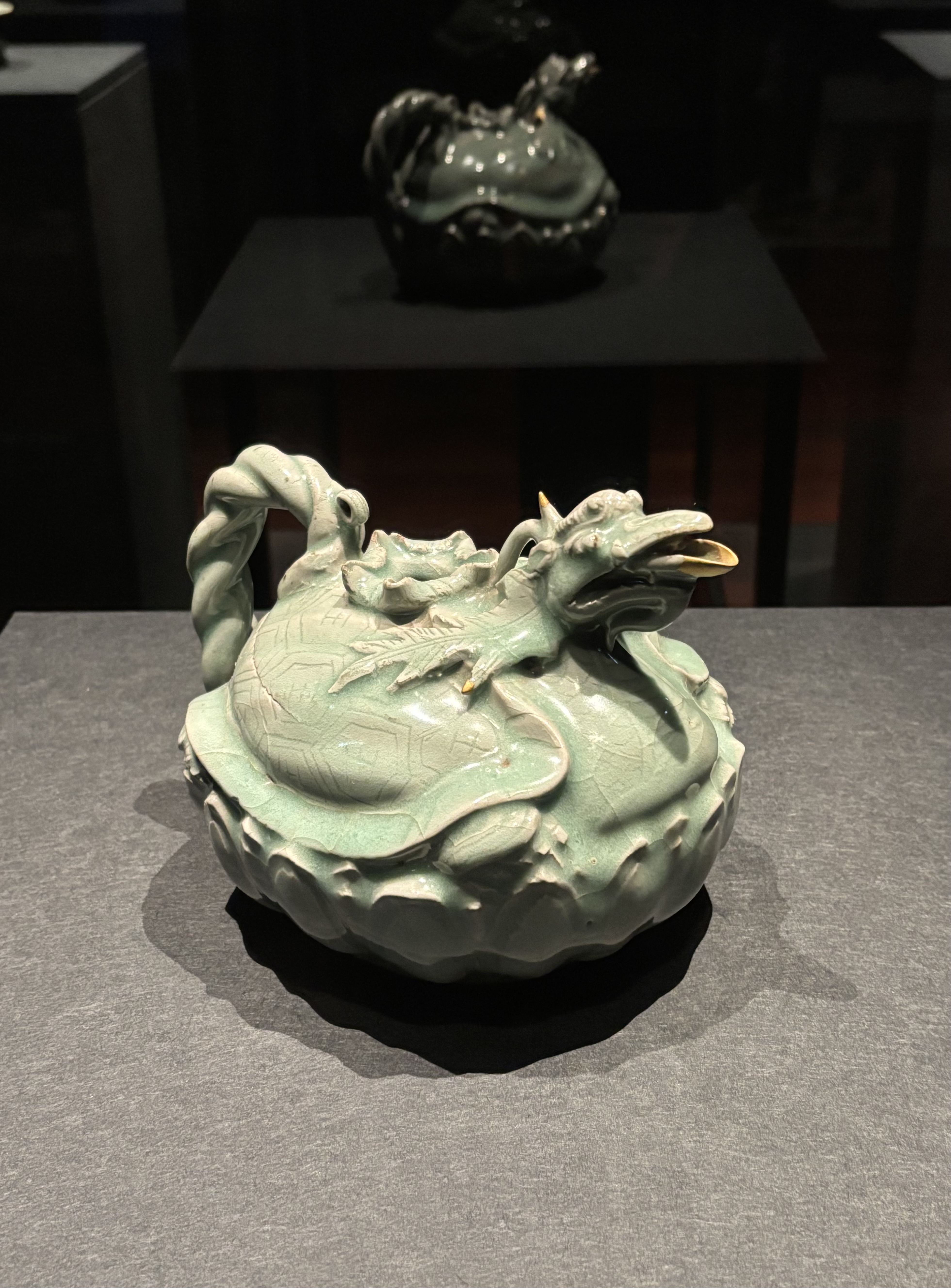
Photo: Motoko C. K. / original / CC BY 4.0. Original image displayed proportionally; no cropping, retouching or recompression.
Carry one question from the palace to the museum
At the palace, ask how a building encourages you to pause. At the museum, ask how an object invites you to hold it or look at it. You are not trying to give every object a palace connection; you are choosing a way of paying attention. A few objects, some label reading and a seated break can be more satisfying than a quick circuit of every case.
Allow separately for changing locations and getting something to eat. Use this guide's existing map connection and adjust the endpoints to suit your accommodation or onward plans. A station-to-station result does not include the visits. If the palace takes longer than expected, reduce the number of museum galleries instead of trying to recover the time by rushing.
Let the day get smaller if it needs to
If the palace is closed, the museum can be the day's main event. If the museum gallery you wanted is unavailable, keeping only the palace is also a reasonable choice. Check temporary exhibitions, children's facilities and reservation-only activities separately; do not assume they are included in an ordinary visit.
For a different architecture-focused day, see the Dongdaemun Design Plaza guide. Treat it as another outing, rather than an extra stop you have to fit in here.