From the National Museum of Korea to Itaewon: looking closely at celadon, buncheong and white porcelain
They are all vessels, but some hide a spout inside an animal, some cover a bowl in repeating patterns, and others hold your attention through their outline alone. This outing follows those differences in shape and surface: compare ceramics at the National Museum of Korea, then choose a meal in Itaewon.
It suits visitors who enjoy returning to objects and reading their labels. If a few highlights are enough, leave earlier instead of filling both ceramics sessions. The schedule allows about seven hours from outside Ichon Station to Itaewon Station. You can finish when you tire of looking, or save Itaewon for another day.
Check the galleries, then choose three questions
The museum's celadon gallery notice lists gallery 303, Celadon, and gallery 304, Buncheong Ware and White Porcelain, as open. Separate closures affect Buddhist Sculpture, Metal Crafts and the immersive gallery. This does not mean the entire museum is closed. If Buddhist sculpture is your main reason for visiting, check that gallery's latest notice; ceramics are not a substitute for the visit you intended.
Start with a question about use. Where is the spout, how would the vessel be held, and how do those parts relate to its body? Read the label before deciding what it held: resembling a wine pot is not proof. Next, ask how a pattern was made. Does it appear cut into the surface, pressed into repeated shapes or drawn with a brush? Check your impression against the technique on the label. Keep a third question for comparison: remember one bowl's rim and swelling sides, then find a similar shape in the next gallery. Does a change in material or decoration make it seem heavier or lighter?
Celadon: look at the outline before the decoration
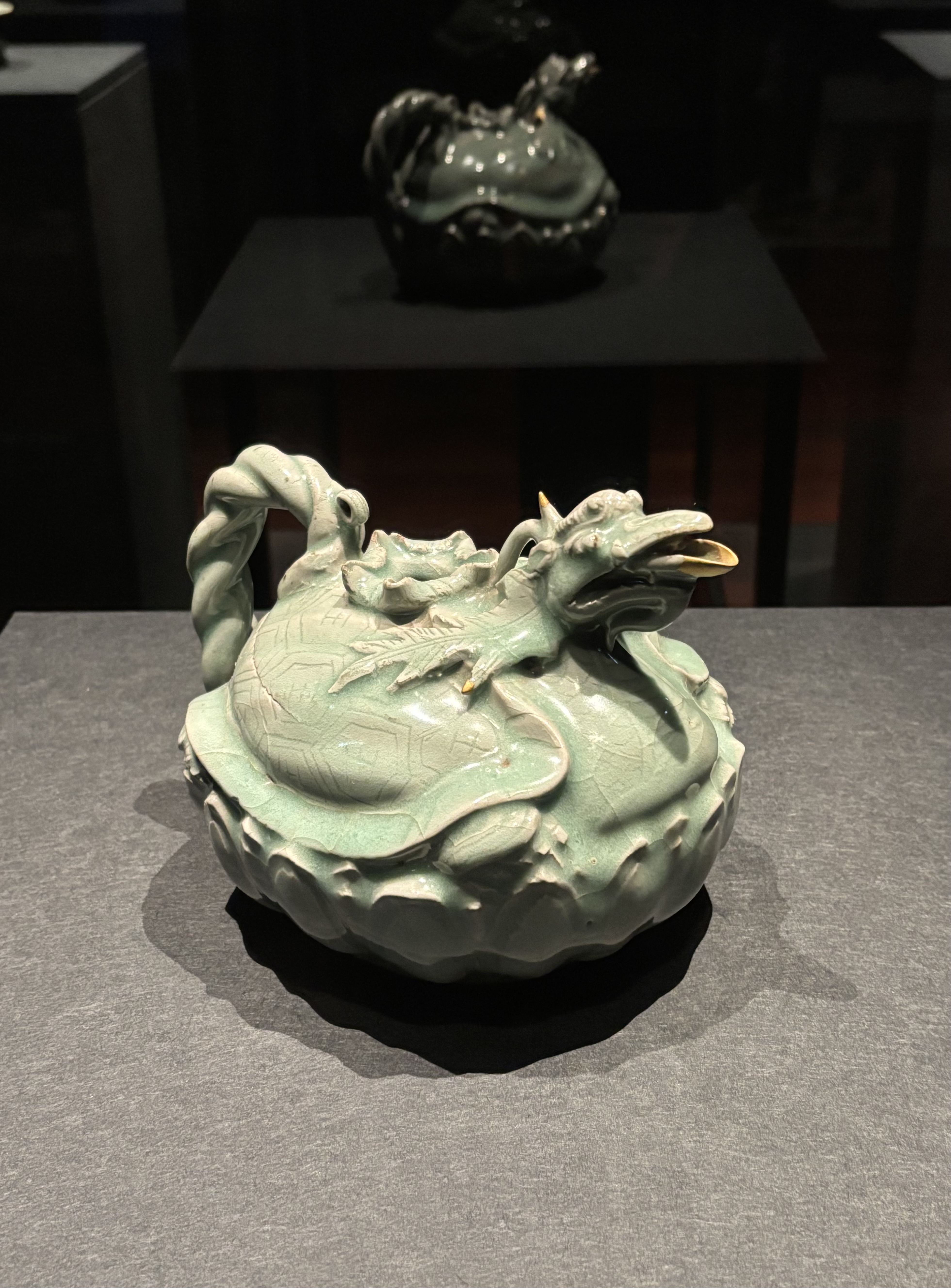
The museum's celadon collection list includes ewers, vases, bowls and incense burners, with incised, moulded or inlaid decoration. Use it to choose what to look for; individual objects and case locations may differ on the day.
Choose two objects with a similar shape or purpose. Spend a few minutes looking at the whole before photographing a label. Does the spout project strongly? Does the handle look easy to grip, or merge into the decoration? Read the label afterwards and keep your own interpretation separate from the explanation. Being able to say which detail suggests how an object was used takes you further than remembering its name alone.
Buncheong and white porcelain: different ways of being white
The museum's buncheong and white porcelain introduction distinguishes buncheong's white slip coating from white porcelain made with a different clay body and fired at high temperature. Its list includes bowls stamped with chrysanthemums, decorated ewers and bottles, and white porcelain jars. You need not memorise a chronology to begin: ask how the white surface came about.
On a stamped vessel, look at the spacing between repeated motifs and how they meet the rim or base. If an object has an inscription, read the label rather than assuming the text names a shop or maker. With white porcelain, try looking beyond painted decoration. Follow the light around the body and the narrowing from shoulder to neck. These are ways to compare visual effects, not to identify clay, date or kiln by eye.
The 45-minute return visit after lunch is for one memorable example each of celadon, buncheong and white porcelain. Make three columns: shape, surface, and evidence of use. Mark anything you can only guess as unknown. Do not occupy the best viewing position just to finish your notes. If the question has stopped holding your interest, leave rather than copying every label.
Visiting conditions and a seven-hour schedule
The museum's visitor information says general permanent exhibitions are free, while some special exhibitions charge separately. Usual opening is 09:30, with closing at 17:30 on Monday, Tuesday, Thursday, Friday and Sunday, and 21:00 on Wednesday and Saturday. Admission ends 30 minutes before closing. Check notices for holiday closures and periodic gallery closures: ordinary weekly hours are not a year-round guarantee. Allow time for security, storing bags and collecting them. Do not take food into the galleries.
The museum's transport page identifies Ichon Station and the direction of exit 2. Timing below begins outside the station, excluding the journey from your hotel. Movement inside the museum, meals and the transfer to Itaewon are included. Every duration is an editorial estimate, not a timed walk. Check a live route for the actual transfers, waits and walking between Ichon and Itaewon: the 45-minute allowance is not a promised train journey time.
| Time | Activity | Minutes |
|---|---|---|
| 09:30–10:00 | Walk from outside Ichon Station, clear security, store bags and find the galleries | 30 |
| 10:00–11:00 | Compare celadon shapes and decoration | 60 |
| 11:00–11:15 | Sit down for a rest | 15 |
| 11:15–12:15 | Compare buncheong and white porcelain surfaces and outlines | 60 |
| 12:15–13:00 | Lunch in a permitted dining space, including the wait | 45 |
| 13:00–13:45 | Revisit objects and make the three-column comparison | 45 |
| 13:45–14:00 | Collect belongings and leave | 15 |
| 14:00–14:45 | Travel to Itaewon, including waits and walking at both ends | 45 |
| 14:45–15:15 | Look around near the station and choose somewhere to eat | 30 |
| 15:15–16:15 | Afternoon meal, including waiting and ordering | 60 |
| 16:15–16:30 | Return to the entrance of Itaewon Station | 15 |
If the first look was enough, omit the 45-minute return visit and head to Itaewon early or finish there. If the museum takes longer, drop the 30-minute street look first, protecting time to leave and travel. If either ceramics gallery closes temporarily, make the other a half-day museum visit instead of adding unverified galleries to fill time. If you need lifts or a route avoiding steps, confirm museum access with staff and check that your chosen Itaewon restaurant has an accessible seat.
Choosing a meal and setting a budget
Seoul's official tourism introduction highlights Itaewon's international food. Agree on cuisine, portions and dietary needs with your companions, then look at the day's menus. After lunch, a smaller afternoon meal may be enough; the itinerary does not require a second large meal. Ask restaurants directly about halal, vegetarian or allergy requirements. Having such restaurants in the district says nothing about every business there.
An adult visiting only the free permanent galleries could set a personal food and drink ceiling of KRW 50,000: KRW 15,000 for lunch, KRW 25,000 for the afternoon meal and KRW 10,000 for water or other drinks. These are budgeting examples, not checked menu prices. Transport, special exhibitions, possible storage charges and shopping are separate. Adjust the figures for your own route and restaurants before leaving.
For a different focus, a separate Gyeongbokgung-to-museum outing considers how palaces and objects express institutions. This visit is about materials, forms and craft. Choose between the two rather than combining every stop and leaving little time to look.