Two Hours in Mumbai’s Fort: From Flora Fountain to the Contrasting Facades of Oval Maidan
You do not need a list of architects’ names to start looking at old buildings in South Mumbai. Begin beside Flora Fountain, a small landmark surrounded by roads, then head towards the north side of Oval Maidan to consider the buildings in relation to the open space. The contrast reveals two very different streetscapes: one draws your eye into a junction; the other lets it travel across an open foreground.
This two-hour outing suits anyone who enjoys taking time over building exteriors. It starts on an open public pavement beside the fountain and ends in the public approach area on the north side of Oval Maidan. It does not include the journey from your hotel or the return trip. You will not enter the courts, university or residential buildings, and crossing the lawn is not a necessary part of the route. If you want to see Indian sculpture and crafts, plan a separate visit to CSMVS rather than fitting the museum into these two hours.
Start with the scale of the junction at Flora Fountain
Save “Flora Fountain / Hutatma Chowk” on your map first. On arrival, meet on a pavement where you will not obstruct others, rather than at the fountain’s base in the road. A conservation survey held by the MMR Heritage Conservation Society records its position at the meeting of roads including Veer Nariman Road and Mahatma Gandhi Road. That setting is worth noticing: the fountain is not a building occupying a whole block, but an object that brings several street views together.
Allow 20 minutes to look at three levels of detail. First, notice how the overall form narrows upwards from its wider base. Then look at the relationship between the basins, supports and sculpted figures. Finally, return to your original position and consider how the surrounding buildings form a backdrop. Identifying one or two details is enough. Do not make risky crossings to see every side, or assume that the water will be running, the fountain will be illuminated at night, or you will be able to approach the railings. The older survey helps explain the location and form; it cannot replace signs and restrictions on site today.
Towards Veer Nariman Road: shift your attention to space
For the next stretch, orient yourself towards Veer Nariman Road and the north side of Oval Maidan. The executive summary of Mumbai’s World Heritage nomination places this road along the northern edge of the architectural ensemble. It provides a geographical link between looking at the fountain area and looking at the streetscape north of the Oval. Compare the two landmarks on a map before setting out, then choose crossings with pedestrian provision on the ground.
The plan allows 20 minutes for finding your way, ordinary walking and waiting to cross. This is not a measured navigation time. No continuous route free of steps or construction barriers has been verified for this article, and no metro exit is specified. If barriers block your way or a crossing is unclear, stop on a safe pavement and check again. Do not continue along the carriageway or enter institutional or residential property to keep to the schedule.
As you approach the Oval, notice whether the view changes from a busy junction to a more open foreground. The question is not which building is prettiest, but how far the buildings stand from you, how much of each facade you can see from the street, and how the open ground lets you see several buildings as a group.
Read two kinds of facade from the north side of the Oval
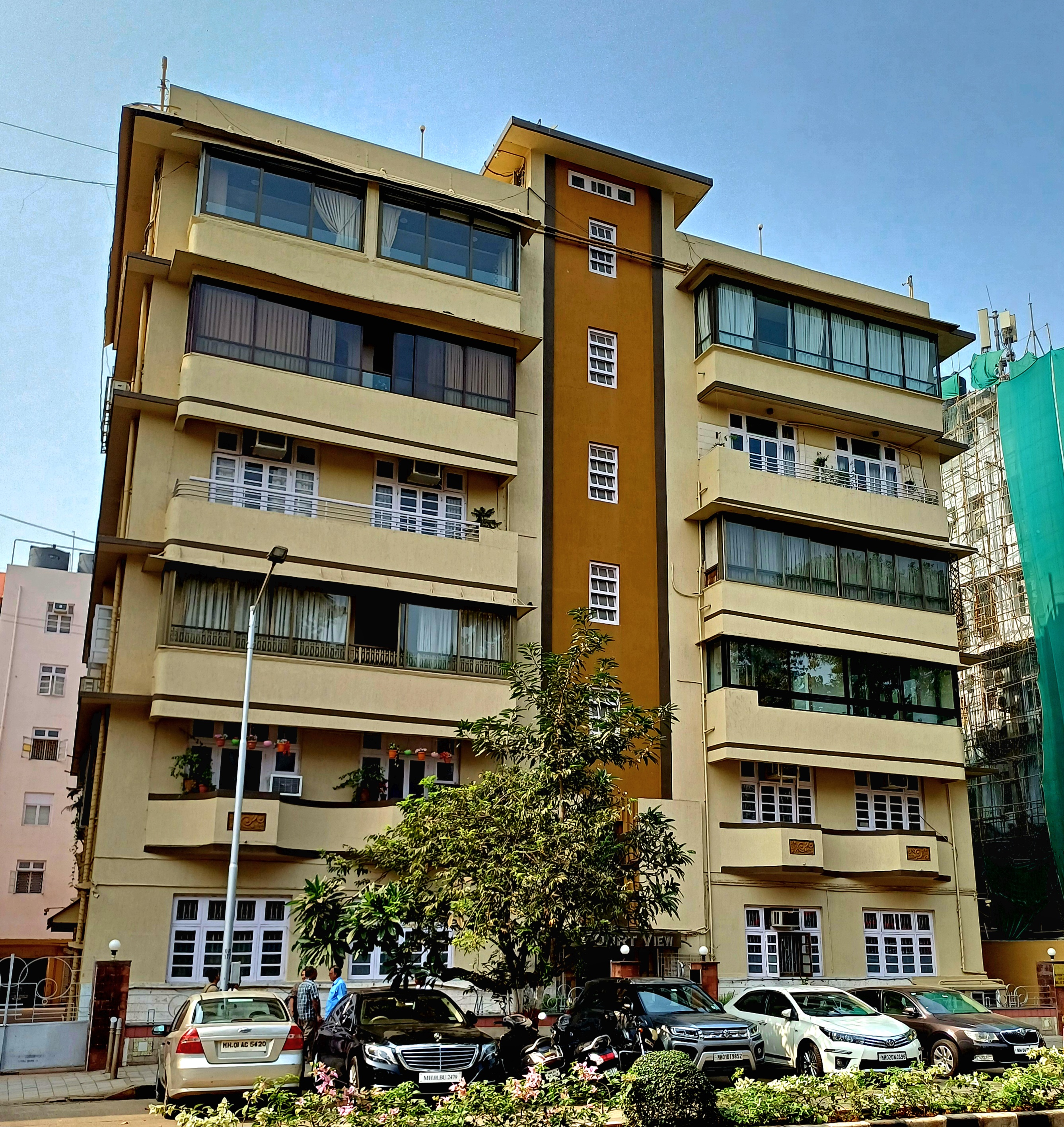
UNESCO’s description of the ensemble identifies Victorian Gothic buildings to the east of Oval Maidan and Art Deco buildings to the west. The two sides belong to different periods of urban expansion, making the open ground a useful place to consider how South Mumbai changed.
Backbay reclamation in the early twentieth century extended Mumbai westwards, creating space for housing, commerce and cinemas. The contrast across the Oval therefore reflects more than a change in decoration: it also speaks to changing land use and everyday needs. The incorporation of Indian design elements into Art Deco became known as Indo-Deco.
Spend 25 minutes looking towards the eastern side first. Where the view permits, look for changes in roof height, towers and repeated openings. Rajabai Clock Tower can help you read the skyline, but a complete view is not guaranteed from every position on the north side. UNESCO also notes climate-responsive elements such as balconies and verandas. Look for the shaded spaces beyond the wall surfaces rather than simply counting pointed roofs. Do not label every nearby building with an arched window Gothic.
Then turn towards the west and spend another 20 minutes comparing the arrangement of residential facades. Which lines run horizontally? Where do balconies, windows and projecting sections create repetition? You do not need to date every window from a distance. Instead, compare the repeated storeys facing the open ground with the outlines of the public buildings on the eastern side.
Keep your observations to what is actually visible from the open pavement where you are standing. If trees, vehicles or construction obscure one side, note a visible roofline or neighbouring facade. There is no need to circle the entire Oval to complete the comparison. This article covers the northern approach area, not a walking tour of the whole World Heritage property.
Take a break before the final comparison
Place a 20-minute break between the two periods of architectural observation. Have some water or a snack you have brought with you. If you choose a nearby business, check its prices and the wait first, and adjust if no seats are available. No particular café is an essential stop. If the queue is too long, have a brief water break somewhere you will not obstruct others, preserving time to finish the walk. This is not a full meal; plan lunch separately.
Use the final 10 minutes for three questions. Was it easier to see the whole composition beside the fountain or north of the Oval? What was the clearest difference between the eastern and western silhouettes? Which details did you see yourself, and which came from background reading? Separating observation from inference is more useful than memorising five more building names.
How the 120 minutes fit together
| Time | Plan |
|---|---|
| 09:00–09:05 | Meet on the public pavement beside the fountain and get your bearings |
| 09:05–09:25 | Look at the fountain’s form and the scale of the junction |
| 09:25–09:45 | Find your way towards the north side of the Oval, walk and wait to cross |
| 09:45–10:10 | Observe building outlines and shaded architectural elements towards the east |
| 10:10–10:30 | Water and an optional snack break, including a short wait |
| 10:30–10:50 | Compare residential facades towards the west |
| 10:50–11:00 | Gather your observations in the northern public approach area and check your onward direction |
These are editorial planning allowances, not times measured on the ground. Travel before reaching the fountain and after leaving the endpoint is extra. If finding your way takes an additional 10 minutes, reduce the western observation period to 10 minutes. If it takes another 10 minutes, deduct those from the eastern observation period. Keep the break and the final time for checking how to leave. If an obstructed route, intense heat or rain makes staying outdoors uncomfortable, finish early rather than forcing the outing to fill two hours.
Transport, budget and choices before you go
Use the rail, metro or road services available on your travel day to reach the vicinity of Flora Fountain, then check the final stretch from your arrival point to the public pavement. A station name is not a verified entrance, and a straight-line distance on a map cannot tell you how long crossings will take. Anyone needing a step-free route or access with a pushchair should establish the actual exit and street conditions beforehand. This short itinerary does not guarantee continuous accessible passage.
The plan includes no paid indoor visits. The main costs are transport to and from the area, water and snacks. You might set a personal food-and-drink limit of INR 200, for example, then add your actual transport costs. This is a budgeting example, not a quoted price from a business, and it does not guarantee a full meal. Treat a museum visit, film or sit-down lunch as the next part of your day, with its own time and budget.
Choose a daylight period when you can comfortably stay outdoors, wear suitable walking shoes and carry drinking water. The value of this outing lies in slowing down: first seeing how a junction draws the eye together, then how an open space brings buildings from different periods into one city view.