Two hours in Wanhua: Longshan Temple carvings and Bopiliao shophouses
Longshan Temple offers a dense array of decoration; Bopiliao invites a slower look at how buildings make room for people to move. Pairing them on a short outing does not require memorising every deity, craftsperson or shop name. At the temple, choose one detail and follow how a material suggests movement. Along the old street, choose a short stretch of covered walkway and notice how columns, eaves and doorways shape everyday encounters. Two hours can leave you with two distinct ways of looking.
Start and finish at Longshan Temple Station. Choose a daytime visit from Tuesday to Sunday, and check Bopiliao's visitor information before leaving: the block generally stays open until 21:00, exhibition rooms until 18:00, and the site closes on Mondays, with additional closures possible during disasters or other temporary circumstances. Later street access does not mean later access indoors. The example below runs from 10:00 to 12:00. It leaves night markets, lengthy exhibitions and meal queues for another time. Eat before or after the outing, and keep 20 minutes in the middle for sitting down and drinking water.
Set aside time to rest and return to the station
| Time | Activity | Minutes | Time allowance |
|---|---|---|---|
| 10:00–10:15 | Walk from Longshan Temple Station to the temple and check the day's visitor route | 15 | Walking 10, waiting and reading signs 5 |
| 10:15–10:45 | Longshan Temple: the roofline and one crafted detail | 30 | Looking 25, moving around the temple 5 |
| 10:45–11:00 | Walk to Bopiliao, cross the streets and find the entrance | 15 | Walking 10, waiting 5 |
| 11:00–11:30 | Bopiliao: compare doorways and covered walkways along a short stretch | 30 | Looking 25, moving through the block 5 |
| 11:30–11:50 | Sit down somewhere available for use and drink water | 20 | Resting 20 |
| 11:50–12:00 | Return to Longshan Temple Station | 10 | Walking 10 |
The total is 120 minutes: 50 for looking, 40 for walking, 10 for waiting and 20 for resting. These are planning allowances, not measured walking times. Travel from your accommodation and any journey after the finish are separate. On leaving the station, read the direction signs and use open pavements and pedestrian crossings. If you need a lift or a route avoiding steps, check suitable access beforehand instead of struggling to keep up with companions at a junction.
Longshan Temple: from the roofline to the movement of a dragon
On arrival, stand somewhere that leaves entrances clear. Look at the difference in height between the centre of the front hall's roof and its upturned corners. Then choose one detail you can see comfortably. The temple's audio guide introduces the cast-metal dragon columns in front of the Sanchuan Hall, carved stone windows and coffered ceilings. Treat these as possibilities rather than a checklist. If worshippers are using an area, or it is unsuitable for stopping, turn your attention to something you can observe quietly from where you are.
For a dragon column, find the head first, follow the body around the column, then notice how scales and dorsal fins give hard material a sense of twisting motion. At a carved stone window, identify the direction in which one figure is facing, then look at how the open spaces separate foreground and background. To study the roof, move to a place where stopping is allowed and follow one section of its outline with your eyes. There is no need to step into the middle of a crowd for a panoramic photograph. Five minutes spent this way can be more memorable than taking a photograph of every ornament.
The temple's descriptions also explain how the works have changed. Some door-god paintings and decorative roof work have been renewed, and the main hall has been rebuilt. What you see includes repairs and replacements from different periods; the decorations are not all originals from the temple's foundation. Find a detail that interests you, then read its guide entry. That is more useful than trying to memorise every date at once.
This remains a place of worship. Leave space in front of offering tables and along entrances and passageways, and check whether you would obstruct someone before stopping. Follow local photography signs and avoid making people at prayer the subject of your photographs. Do not cross ropes, climb onto raised bases, touch carvings or pass through ritual spaces to find an angle. If you wish to worship, allow extra time and follow the temple's guidance. The 30-minute architecture visit need not include every ritual as well.
Bopiliao: follow the covered walkway and see which way the doors face
After leaving the temple, finish crossing the streets and finding the entrance before beginning your observations. At Bopiliao, choose a short stretch that is open and not crowded rather than immediately trying every exhibition room. Look from the eaves to the spacing of the columns, then down to the shopfronts. How far are the columns from the wall? If someone pauses under the eaves, can another person still pass? Do the doors face a narrow lane or a wider street?
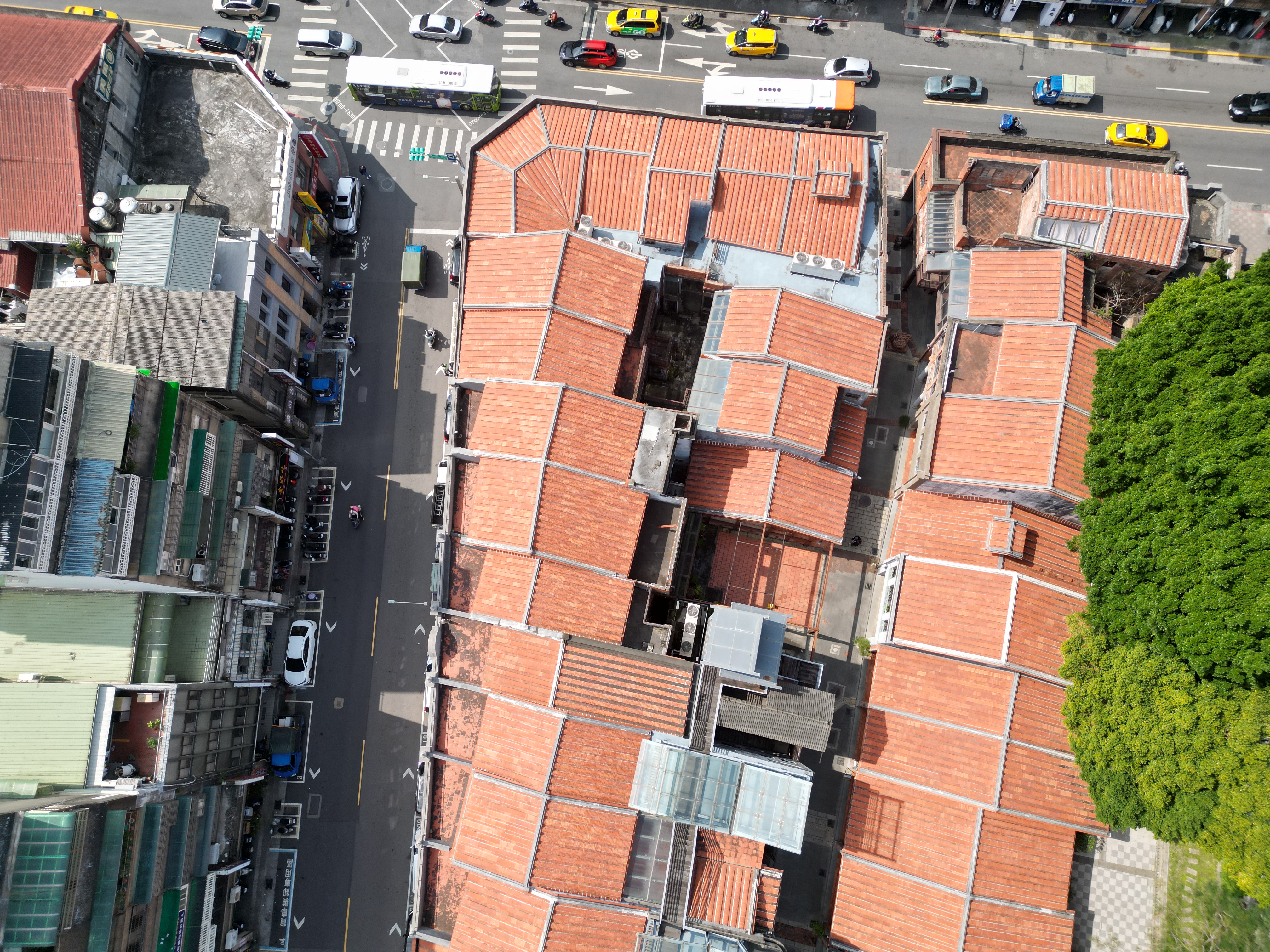
The official introduction to the covered walkways explains that the narrower arcade along Lane 173, Kangding Road, and the arcade on the Guangzhou Street side reflect arrangements from different periods. Choose a small section of each that you can see and compare the depth of the shade, the materials of the columns and the space for walking. You need not walk every street or assume that every differently coloured brick belongs to a different era.
Another official account, on the origins of the block, describes how shopfronts turned towards Guangzhou Street after the road was opened, leaving the original street as a lane. With that background, look again at a corner: the buildings can remain while the main direction of access changes. This offers a different kind of detail from Longshan Temple. At the temple, follow the curve of a dragon; here, follow how people enter, pause and pass through.
If a small exhibition room happens to be open and interests you, include it within these 30 minutes by replacing some of the outdoor observation. Save a lengthy exhibition for another visit. An open door does not make a working area a visitor space. Avoid leaning against old walls, touching exhibits or setting up equipment that blocks the street. If an event restricts access, follow staff directions to another section.
Use the remaining time to sit down and return without rushing
At 11:30, put the camera away and find somewhere suitable where sitting is currently allowed. Bopiliao lists drinking-water dispensers among its facilities; use them according to the signs on arrival, and bring your own water as well. If you choose a nearby business for a break, first check seating, purchase requirements and waiting times. Buying a drink is optional. Leaving a full meal outside this outing protects both the rest period and the walk back. If you are hungry, change the remaining plan instead of trying to eat hurriedly on the move.
If you are already 10 minutes behind before reaching Bopiliao, reduce the shophouse observation that has not yet begun from 25 minutes to 15, keeping the five minutes for moving through the block. If you are 20 minutes behind, choose just one feature to look at for five minutes, then use the original five-minute movement allowance to leave. Keep the 20-minute rest and necessary walk back. If the delay happens after you have finished looking at the shophouses, you cannot subtract time already spent. Accept a later return or plan your return from your actual location instead of speeding up to reach the station at 12:00.
If heavy rain, slippery surfaces or crowds make stopping difficult, first rest somewhere safe where access is permitted, then decide whether to finish early. On Mondays or during a temporary closure, move this two-place comparison to another day rather than going around barriers for photographs. Before reaching the station, recall one clear contrast: how the temple's decoration directs your gaze, and how the shophouses' columns leave space for people. One detail you have actually noticed is enough to make these two hours your own.